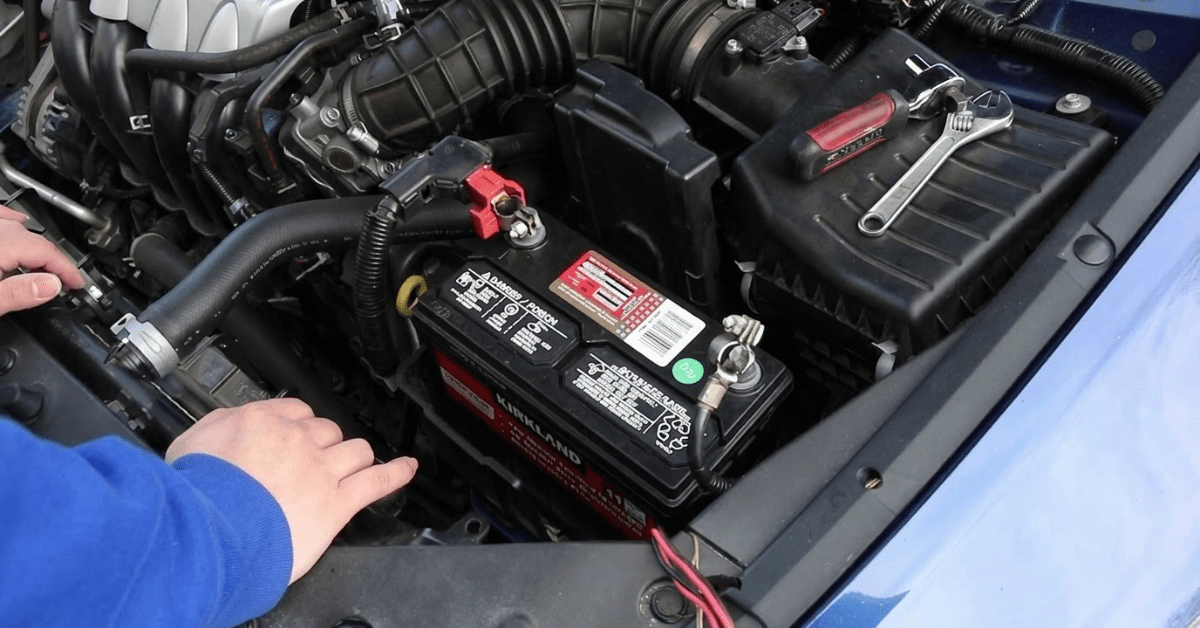
The short answer
In Dubai, count on a swap every 2 to 3 years, against 3 to 5 years as the worldwide norm. Fierce heat, constant undercharging on short city runs and air conditioning that never rests wear batteries down here faster than in almost any other place.
Below you will find replacement intervals, the symptoms to watch, the main battery types, prices in AED and upkeep advice grounded in published electrochemistry research.
Real Battery Life in Dubai Heat
Expect 2 to 3 years here, well short of the 3 to 5 years quoted globally. Heat is the reason: it speeds up the chemical wear taking place inside every cell.
Battery University's article on heat and battery life (BU-806a) finds that each 8°C increase halves how long a sealed lead-acid battery lasts. At 41°C, a battery expected to give 10 years at 25°C is finished in just 30 months. In summer, the space under a Dubai bonnet routinely passes 60°C to 70°C, squeezing that life even harder.
This is how long the 4 most widely fitted battery types typically last:
| Type of Battery | Typical Life Worldwide | Typical Life in Dubai/UAE |
|---|---|---|
| Standard Flooded Lead-Acid | 3 to 5 years | 1.5 to 2.5 years |
| SMF / Low Maintenance | 3 to 4 years | 2 to 3 years |
| EFB (Enhanced Flooded Battery) | 3 to 5 years | 2 to 3 years |
| AGM (Absorbent Glass Mat) | 4 to 6 years | 3 to 4 years |
A battery that has reached 2 years cannot be taken for granted. With summers like these, 2 years is the entire working life of an ordinary flooded unit.
7 Symptoms of a Battery Near the End
Before it dies, a battery tends to show 7 clear symptoms: sluggish starts, weak headlights, a warning on the dash, a bulging case, crusted terminals, misbehaving electronics and repeated jump-starts.
1. The Engine Turns Over Slowly
An engine that drags as it cranks, on a scorching afternoon or a cooler morning, is losing cranking amps. The starter needs a large current in brief bursts, and a worn battery cannot supply it, so the car hesitates or needs several tries. No symptom of lost capacity shows up earlier or is easier to measure.
2. Headlights and Cabin Lights Look Weak
Headlights that are clearly dimmer at idle point to low voltage at the terminals, usually under 11.8V with a load on. Heavy consumers such as the headlamps and the blower fan show the drop first. If the light brightens as you raise the revs, the alternator is covering for a tired battery.
3. Jump-Starts Become a Habit
Reaching for jump leads more than once a month without an obvious cause tells you the battery is failing. One boost after forgetting the lights is nothing unusual. Repeated ones show it can no longer rest above the 12.4V it needs to start the car reliably.
4. A Battery Symbol Lights Up
A charging or battery icon on the instrument panel calls for a professional diagnosis straight away. The cause may be the battery, the alternator or a snapped serpentine belt. The monitoring systems in the Nissan Patrol, the Toyota Camry and the Land Cruiser pick up voltage irregularities down at cell level.
5. The Case Has Swollen
A bulging battery case is dangerous and means replacement now. July and August heat under the bonnet, above all in open car parks in Jebel Ali and Al Quoz, speeds up gas forming inside. Once the case swells, the electrolyte has broken down and the pressure inside is past what is safe.
6. Crusted Terminals, White or Bluish
Thick white or bluish residue on the terminals shows acid gassing off as the battery deteriorates. A little of it comes away with baking soda mixed into distilled water. A heavy crystalline crust means the battery is venting from inside and failure is well under way.
7. Electronics Start Playing Up
An infotainment screen with a mind of its own, sluggish windows, the AC dropping out for a moment or central locking that works only sometimes can all come down to wavering battery voltage. Cars such as the Audi A6, BMW 5 Series and Mercedes C-Class depend on a steady 12.6V feeding dozens of control modules, and a dying battery sets off a chain of electronic faults.
Why Batteries Wear Out So Fast in Dubai
Five things pile on top of each other here and age batteries faster than in most cities: savage summer temperatures, short urban journeys, cars left standing for weeks, heavy electrical demand and desert dust.
Summer Temperatures
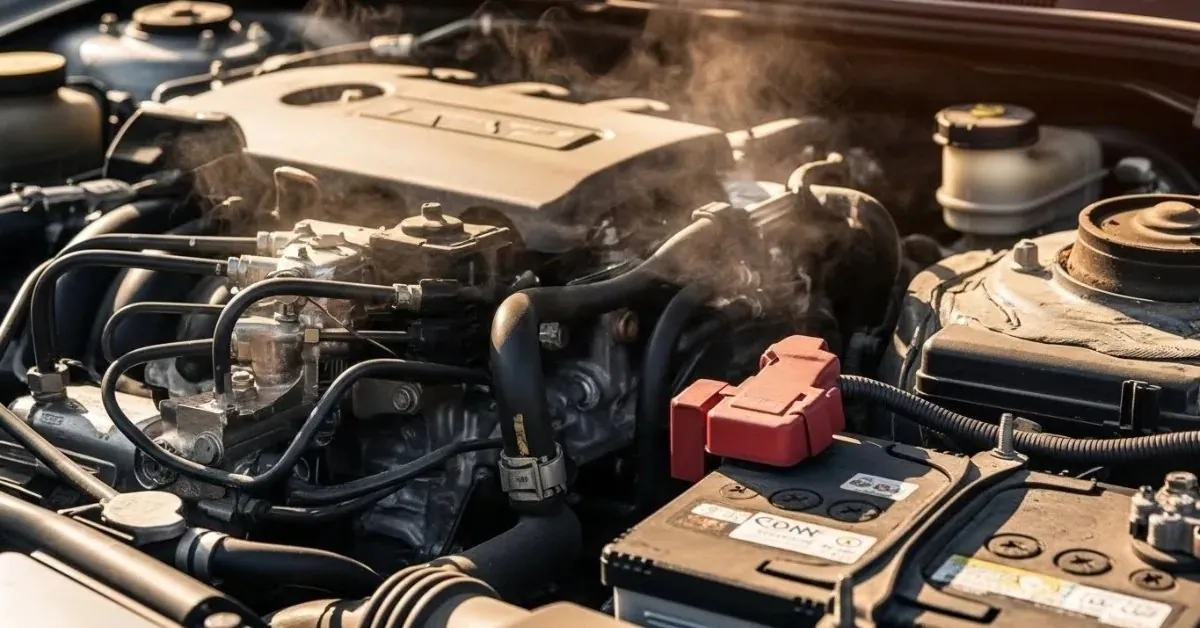
Outside air hits 45°C to 50°C and the engine bay 60°C to 70°C, so heat hastens electrolyte loss and plate corrosion. Sustained heat permanently speeds the fall in SOH and shortens battery life, and that damage does not reverse.
Short City Journeys
Drives shorter than 10 to 15 minutes leave the alternator no time to replace the charge used at start-up, so the battery lives permanently undercharged. That is a classic cause of sulfation: lead sulfate crystals set hard on the plates and capacity is lost for good.
Cars Left Standing
Leaving a car parked 2 to 4 weeks over Eid, during Ramadan or while you travel lets it self-discharge quickly, particularly in the heat. Self-discharge roughly doubles with every 10°C rise, so a battery sitting at 45°C loses charge about 4x as fast as one at 25°C and may never fully come back.
Heavy Electrical Demand
Running the AC, the infotainment, reversing cameras and USB chargers all the time loads the electrics far more than in cooler countries. The climate blower and radiator fans run almost without let-up, so the battery never gets a rest.
Dust and Sand
Fine sand settles on the terminals and starts micro-corrosion, raising contact resistance month by month. More resistance means less current, poorer charge acceptance and a shorter life on real roads.
Checking the Health of Your Battery
Three checks give you a reliable picture: a look over the battery, a resting voltage reading and a load test done by a professional.
- Look it over every 2 months: watch for crusted terminals, a swollen case or leaking electrolyte
- Resting voltage: a sound, fully charged unit shows 12.6V or more when the car is off. Under 12.4V it is partly discharged, and under 12.0V it is badly run down
- Load test: shows whether voltage holds up under the real current draw of starting the engine. It settles the question, and a battery workshop needs under 5 minutes for it.
- At every service: ask for a battery diagnostic whenever the car goes in for an oil change or brake work
If your car battery has reached 2 years and nobody has ever load-tested it, have that done before May. Going into summer on a marginal battery is among the easiest roadside emergencies to avoid.
Changing the Battery, Stage by Stage
A proper swap here runs through 6 stages: diagnosis, choosing the right battery, removing the old one safely, cleaning, fitting and finally resetting and testing the systems. Each one looks after the battery's life, the car's electrical balance and its onboard systems.
Step 1: Diagnose First
Test the whole electrical system before anything is swapped, covering the alternator, the connections and whether the battery is deeply discharged. A failing alternator or a loose clamp can mimic a dead battery. Skip this and you often face a second failure a few weeks later.
Step 2: Pick the Right Battery
Match group size, reserve capacity (RC) and CCA (Cold Cranking Amps) to the maker's OEM specification. Large SUVs such as the Mitsubishi Pajero, Nissan Patrol and Toyota Land Cruiser call for high-capacity units, so take the figure from the handbook; a sealed AGM build resists heat-driven electrolyte loss better.
Step 3: Take the Old Battery Out Safely
Undo the negative (black, minus) terminal before the positive (red, plus) so nothing can short through the body. Free the hold-down bracket, then lift the battery vertically out of its tray.
Step 4: Clean the Tray and Terminals
Work over the tray and clamps using a wire brush dipped in a baking soda mix until the corrosion is gone. Even a thin layer raises resistance, cuts charge transfer and ages the new unit faster.
Step 5: Fit the New Battery
Attach the positive terminal, then the negative, and torque each clamp to 4 to 6 Nm for a firm contact. Coat them in anti-corrosion protection (petroleum jelly or a terminal spray), then put the hold-down bracket back so vibration cannot damage the unit.
Step 6: Reset and Test
On cars fitted with an ECM (Engine Control Module) and a BMS (Battery Management System), register the battery through an OBD-II diagnostic tool. Leave this out and you can expect start-stop problems, wrong charging and fault codes, most often on Porsche, Audi, Volkswagen, BMW and Mercedes-Benz models.
Home Fitting Versus a Mobile Technician
Four kinds of car are better left to a professional: European luxury models that need BMS registration, anything with start-stop, hybrids and any car still inside the manufacturer's warranty.
Changing it yourself is reasonable when:
- The car is a simple older model (pre-2010) without start-stop.
- You own insulated spanners, a memory saver, gloves and eye protection.
- You can get rid of the old unit lawfully and responsibly (lead-acid batteries hold lead and sulfuric acid and must never go in household waste)
Call a professional when:
- The car has start-stop (it needs AGM or EFB plus BMS registration)
- It is a European luxury model.
- It is still under warranty (a wrong installation voids the cover)
- You are unsure of any part of the job.
Mobile fitters reach you within 20–30 minutes wherever you are, Marina, Business Bay, JLT and Sheikh Mohammed Bin Zayed Road included. Since most post-2015 cars need registering, calling a professional usually makes the most sense.
What a New Battery Costs in Dubai
Across the 5 battery types most often fitted, prices sit between AED 150 and AED 1,500+, according to the chemistry, the brand and what the car calls for.
| Type of Battery | Price Range (AED) | Best Suited To |
|---|---|---|
| Standard Flooded Lead-Acid | AED 150 to AED 300 | Older vehicles, pre-2010 |
| SMF / Low Maintenance | AED 250 to AED 450 | Tight budgets, light use |
| EFB (Enhanced Flooded Battery) | AED 350 to AED 550 | Entry-level start-stop cars |
| AGM Battery | AED 500 to AED 900 | Most current SUVs and saloons |
| Premium AGM Battery | AED 800 to AED 1,500+ | Luxury and European models |
Professional fitters generally include installation free of charge and at least a 12-month warranty, while premium makers such as Varta and Bosch go up to 24 months.
Steer clear of AED 150 to AED 200 batteries for a car you use every day. A budget flooded unit good for 18 months ends up dearer across 3 years than a decent AGM good for 36 to 48 months under UAE conditions.
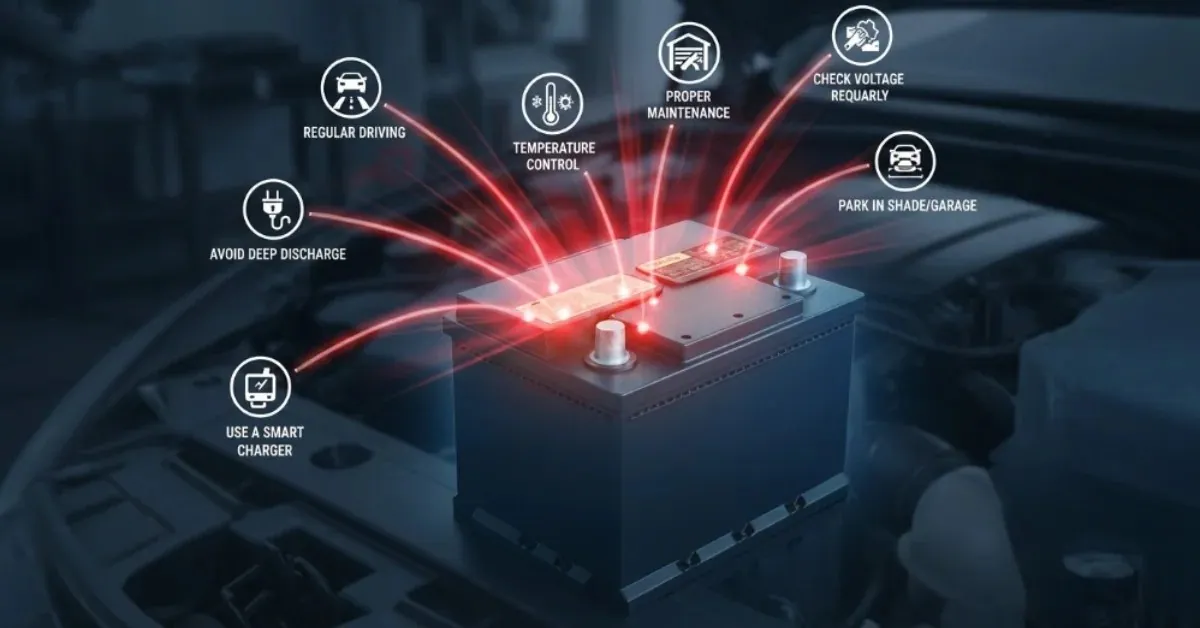
Making Your Battery Last Longer
Six habits make the biggest difference: shaded parking, fewer very short trips, switching accessories off before the engine, a maintainer while you are away, a yearly health check and protected terminals.
- Use covered or shaded parking wherever you can. A roof overhead can take between 10°C and 15°C off what the battery sits in, and Battery University's thermal ageing figures tie that directly to longer life.
- Avoid strings of short drives under 10 minutes. They never let the alternator finish recharging and they hasten sulfation. A 20-minute motorway run at the weekend partly undoes the undercharging
- Turn off the AC, infotainment and headlights before the ignition. That lightens the load the battery faces at the next start.
- Leaving the car longer than 2 weeks? Connect a trickle charger or maintainer first. It holds 12.6V on the battery and stops self-discharge while you are away for Eid or the summer.
- Book a yearly load test, ideally each April before the heat, plus another each October as the season turns. Those are the 2 riskiest points of the UAE year for failures.
- Treat both terminals with anti-corrosion grease or protector spray every 6 months. It keeps the contact clean and stops the oxidation that pushes resistance up.
What You Get When We Change Your Battery
We work to 5 commitments on every call: we diagnose before we sell, we stock batteries suited to UAE heat, our prices are open, our technicians are trained in BMS registration and every installation carries a warranty.
- Test before replacing: each visit begins with a full electrical check, and a battery is changed only when the readings say it has to be.
- Heat-ready stock: AGM, EFB and SMF units from brands rated for high temperatures, chosen for UAE conditions
- Nothing hidden: the price you are quoted covers the battery, the fitting and the terminal treatment
- Registration handled: trained technicians with OBD-II tools look after European cars that need the battery registered, Volkswagen, Porsche, Audi, Mercedes-Benz and BMW among them
Warranty: every battery we supply is covered, and premium brands extend that to 24 months
The Bottom Line
Budget for a new car battery at 2 to 3 year intervals. An ordinary flooded unit usually gives 18 to 24 months, while a good AGM tested once a year can last 3 to 4 years here.
Dubai's weather ranks among the toughest anywhere for a battery. High storage and operating temperatures drive electrochemical ageing that cannot be undone once it starts.
Three steps protect you from being caught out: learn the 7 symptoms, book a load test each April and choose AGM when the time comes to replace.
A battery change need not be a crisis. With a suitable battery, a dependable fitter and one check a year, it becomes a planned, predictable, affordable job in running a car, however high the thermometer climbs.
Your Questions Answered
How many years apart should my battery changes be in Dubai?
Every 2 to 3 years as a rule. Flooded batteries often need changing at 18 to 24 months, and a good AGM can manage 3 to 4 years if it is looked after and tested annually.
Before using a booster pack on an AGM battery, check its spec sheet says it is compatible. A few AGM systems will only accept a charge through a special AGM mode on the pack.
When your battery is past 2 years, has spent those years in Dubai heat and you want a firmer answer than a voltage reading, book a conductance test with a professional.
Ask us to test the battery free of charge, right where the car is parked. From a villa community in Arabian Ranches to an office tower in DIFC or the hard shoulder of Emirates Road, our team comes with professional diagnostic equipment, a broad range of battery makes and the know-how to have you driving again quickly.
Is it safe to keep driving on a weak battery?
You can, but it is a gamble. A marginal battery can give out without notice in traffic on Emirates Road, on Al Khail Road or in an isolated car park. If a load test puts its state of health (SOH) under 70%, change it straight away.
Should a flat battery be recharged or replaced?
A battery younger than 2 years that went flat from a one-off drain, such as lights left on, can be recharged. One older than 2 years, one that has died more than twice, or one that fails its load test is due for replacement. A revived battery that then fails a load test has lost capacity for good and will let you down again.
Which battery brands stand up to Dubai heat?
Amaron, Bosch and Varta have a steady reputation in UAE heat, and the 3 most requested are the Varta Silver Dynamic AGM, the Bosch S5A AGM and the Amaron FLO for standard flooded use.
Does a start-stop car need a particular battery?
It does: either AGM or EFB. An ordinary flooded unit fitted to start-stop can give out within months and may harm the alternator and the BMS. Check the label on the original battery or the owner's manual before choosing.
Can the battery be changed at my home?
Yes. Mobile fitters cover every part of Dubai, Deira, Al Qusais, Al Nahda, Dubailand, Sports City and JLT among them. A trained technician reaches you within 20–30 minutes, runs a diagnostic and fits the new battery where the car stands.
Battery trouble in Dubai? We come to you.
On-site testing, replacement and roadside help, 24/7 across the city.