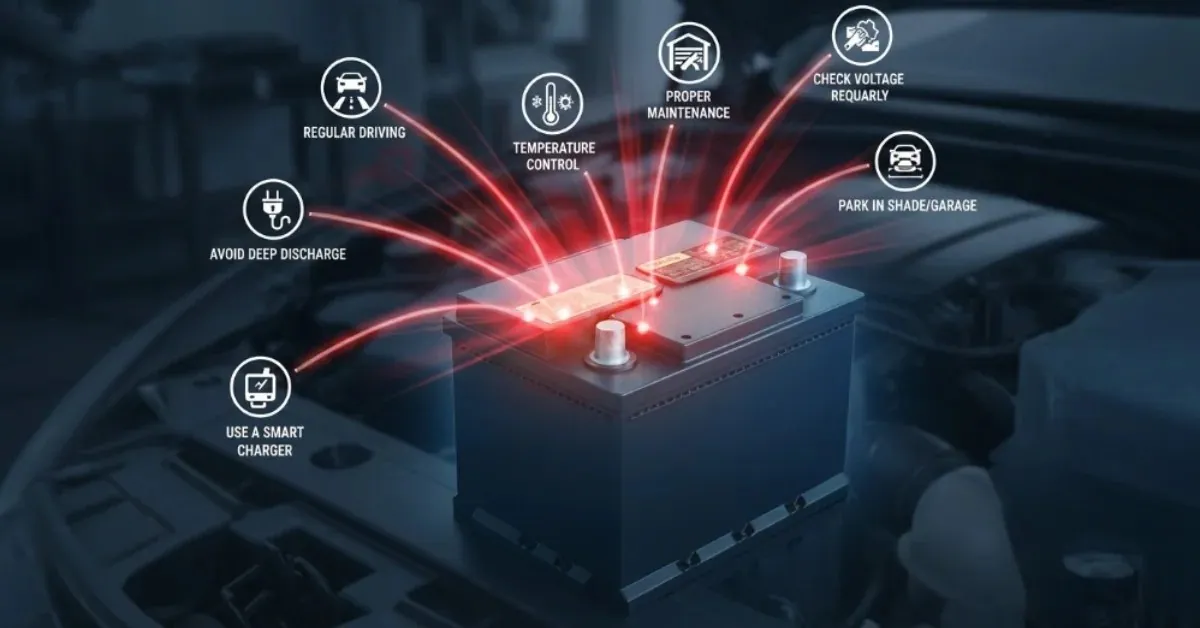
The short answer
A flat battery is the roadside call-out reported more than any other in Dubai and Sharjah, and most early failures could have been avoided. Below are the 10 habits that do most to lengthen a battery's service in local conditions, drawn from electrochemistry research and from field data gathered over more than 50,000 replacements around the Emirates.
What Makes Batteries Give Out Sooner in the UAE?
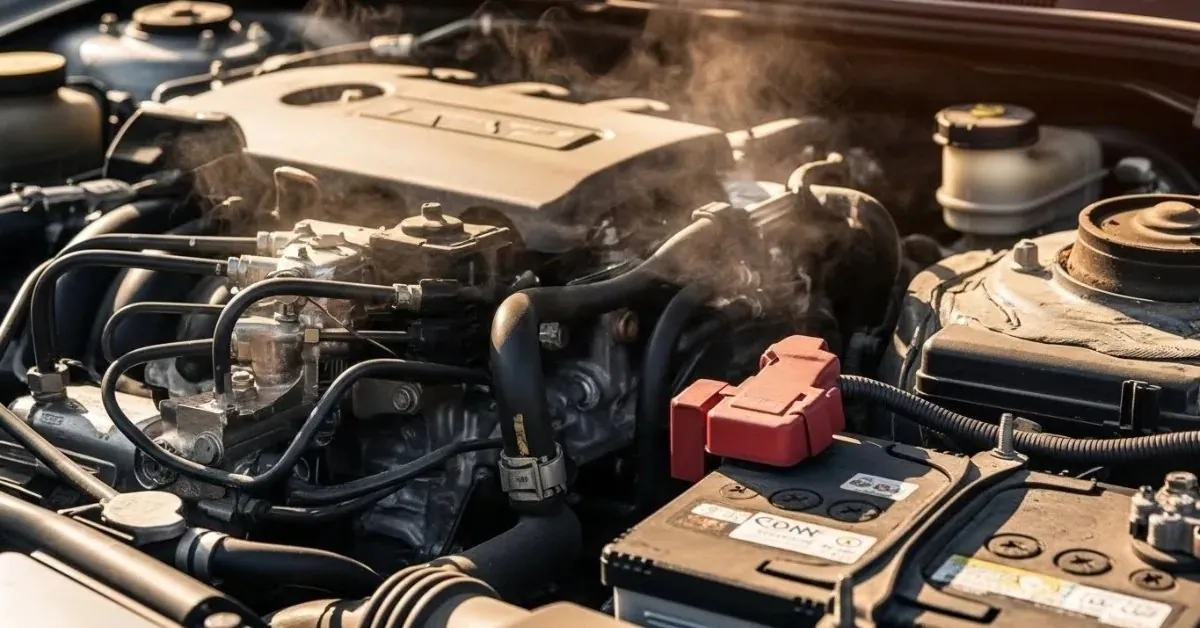
Heat speeds up the chemical ageing inside a lead-acid unit, and the damage mounts once the surrounding air passes 40°C. Under a Dubai bonnet between June and August, temperatures of 60°C to 70°C are routine, far above the 25°C reference point used when batteries are rated.
That heat drives 3 chemical changes inside the case that cannot be undone:
- Water boils out of the electrolyte, upsetting the acid-to-water balance and cutting the charge it can hold for good.
- Above 45°C the positive plates corrode faster, eating away at the grid that holds them together.
- Sulfation speeds up: lead sulfate crystals build on the plates whenever the unit sits under 80% state of charge (SOC) in the heat.
Battery University (article BU-806a) gives the rule of thumb: every 8°C above 25°C halves how many years a sealed battery gives. In practice, a unit rated for 5 years in Europe gives only 18 to 24 months here.
Local cars also ask far more of the battery than it was designed for: dual-zone climate control pulling 25 to 40 amps, infotainment, dashcams and 4 to 6 USB ports charging at once. On short city runs these loads take charge out faster than the alternator can put it back.
Ten Habits That Make a Battery Last Longer
1. Always Look for Shade When You Park
Parking out of the sun keeps the engine bay 10°C to 15°C cooler, and that directly slows the loss of electrolyte and the corrosion of the plates. In the hottest months (June to September), as little as 2 hours in full sun can push the battery towards 70°C.
Ranked from most to least effective:
- An underground or covered multi-storey car park (the top choice)
- A street bay shaded by trees or a building
- A windscreen sunshade plus an insulating battery blanket when you have to park in the open
An insulating wrap for the battery costs AED 35 to AED 80 and can bring the temperature around it down by up to 8°C. A cooler case ages more slowly, for the same reason the heat above does harm.
2. Build in a Longer Run Each Week
A journey under 15 minutes ends before the alternator has replaced what the start took out. Cranking pulls 200 to 400 amps for 1 to 3 seconds, depending on engine size, and putting that back needs 20 to 30 minutes on the motorway, engine turning between 1,500 and 2,000 RPM.
If your driving is mostly the commute, the school gate and the supermarket, the battery lives in a permanent partial state of charge (PSOC), a well-known driver of early sulfation.
Once a week, drive for 25 to 30 minutes without stopping. Sheikh Zayed Road, Al Khail Road and Emirates Road all work well. That one change alone can add 6 to 12 months to the battery's life.
3. Clean the Terminals Every 3 Months
Corrosion on the terminals adds resistance at the connection, starving the starter of current and leaving the battery short of charge, which speeds up sulfation. The white or green crust is lead sulfate and copper compounds, and it builds faster in humid coastal air.
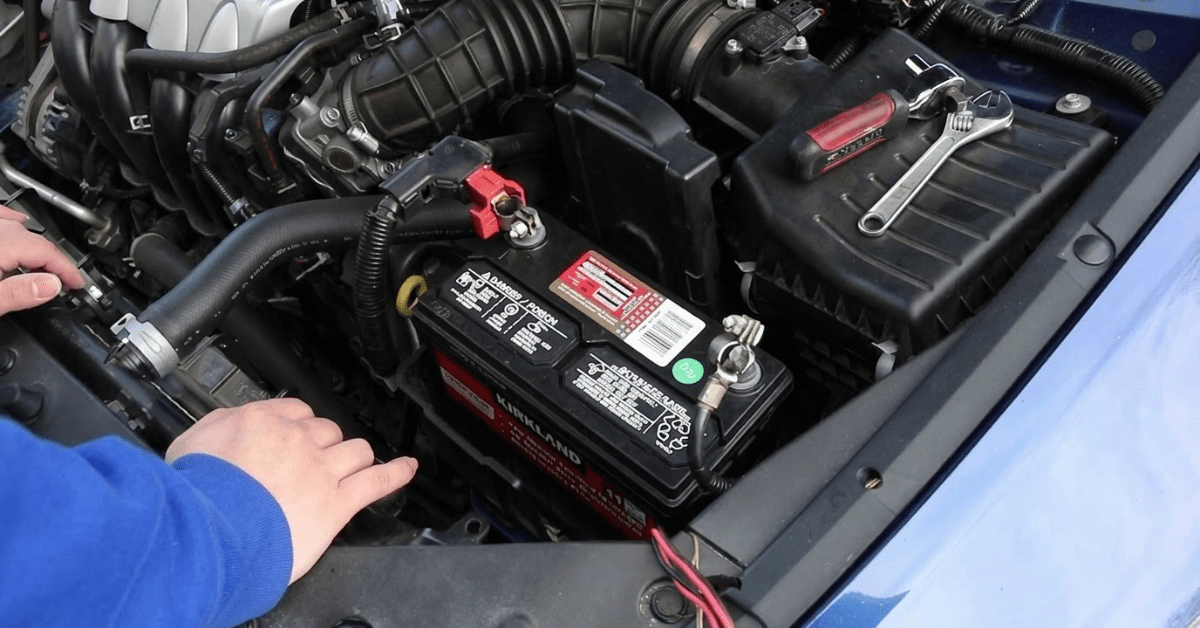
Clean them safely like this:
- Kill the ignition and pocket the key.
- Undo the negative (black) clamp before the positive (red) one
- Dissolve 1 tablespoon of baking soda in 1 cup of distilled water.
- Work each terminal for 60 seconds with a terminal brush or a spare toothbrush.
- Rinse with clean water, then dry with a lint-free cloth.
- Smear petroleum jelly or dielectric grease over each post (3 to 5 mm).
- Refit the positive clamp before the negative one.
The whole job takes about 8 minutes, heads off starting trouble caused by resistance, and is worth repeating every 3 months on a car that lives outdoors.
4. Cut the Electrical Load While Idling or Parked
A typical alternator supplies 13.8V to 14.4V on the move but only 12.8V to 13.2V at idle. At that level it cannot run the air conditioning compressor, the infotainment and the rear demister and still recharge the battery, so the battery makes up the shortfall.
5 habits that empty a battery sooner:
- Sitting with the AC on full before setting off (25 to 40 amps at idle)
- Leaving a hardwired dashcam running overnight (a steady 0.3 to 0.8 amps)
- Running infotainment, heated seats and the rear demister together in slow traffic
- Leaving USB chargers plugged in once the ignition is off
- Fitting LED strips or aftermarket amplifiers that draw 10 to 30 amps beyond the factory spec
Switch off every accessory you do not need before you turn off the ignition. It takes 5 seconds, and across thousands of journeys it saves a real amount of charge.
5. Book a Test Every 6 Months
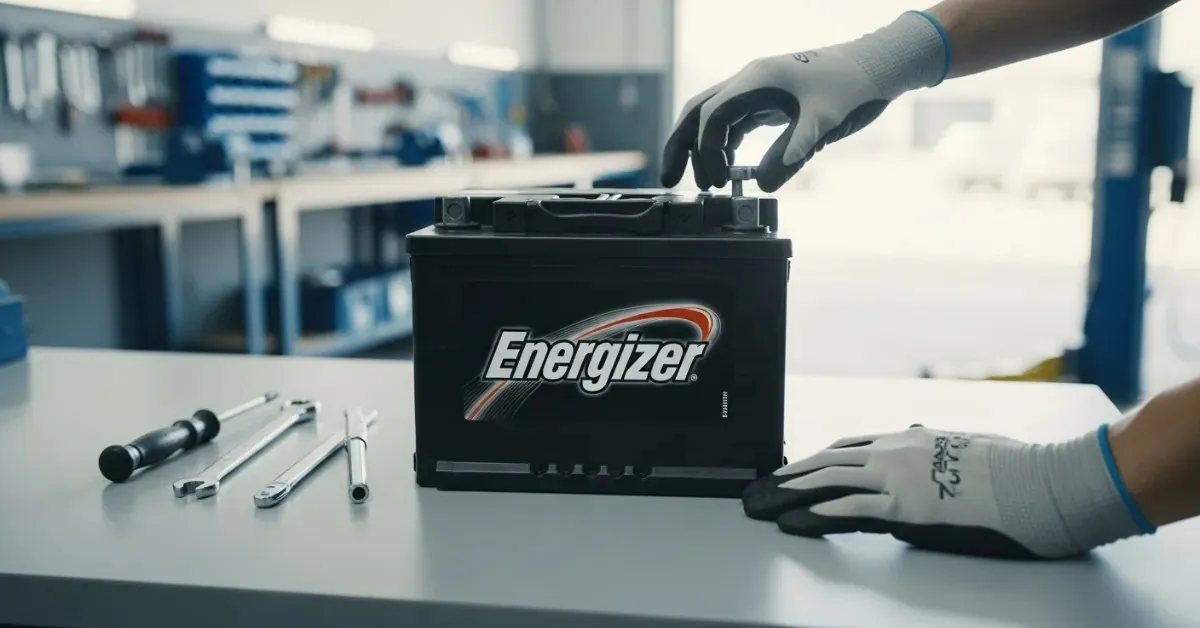
A professional conductance test takes 8 minutes and reports on 4 key readings:
- State of Charge (SOC): how full it is, as a percentage
- State of Health (SOH): how much capacity remains compared with new
- Cold Cranking Amps (CCA): how much of the rated starting power is left
- Alternator output: whether charging sits inside the 13.8V to 14.4V window
A unit at 70% SOH is very likely to fail over the summer, even when it shows 12.5V at rest. Conductance testing, which rests on the Randles circuit model, spots a weakening battery well before a simple voltmeter shows any drop.
Book one in April, before temperatures climb, and a second in October when summer is over. April matters more: anything under 60% SOH at that point should be changed before June arrives.
6. Match the Battery Type to the Climate
Different chemistries behave very differently when it is 45°C outside, and buying the wrong kind is the costliest mistake drivers make at the counter.
| Type | UAE Life (Well Kept) | UAE Life (Neglected) | Suits |
|---|---|---|---|
| Conventional Flooded Lead-Acid | 18 to 24 months | 12 to 18 months | Budget and older cars |
| Maintenance-Free Lead-Acid | 24 to 36 months | 18 to 24 months | Most everyday cars |
| AGM (Absorbed Glass Mat) | 36 to 48 months | 24 to 30 months | Newer cars, start-stop |
| EFB (Enhanced Flooded Battery) | 30 to 42 months | 22 to 28 months | Basic start-stop cars |
For most cars AGM is the strongest option: the glass mat separators tolerate heat, the design copes with repeated discharges far better than a flooded unit (Varta rates its own AGM range at three times the cycle life of a conventional battery), and the sealed case keeps the electrolyte in.
Cars with start-stop (ISS, idling stop systems) need AGM or EFB. A conventional flooded unit fitted to one of these can be ruined within months, because every trip puts it through 5 to 15 extra restart cycles.
7. Make Sure It Is Clamped Down
A battery that is not held firmly shakes at 10 to 50 Hz as you drive, which cracks the lead plates over time and causes tiny shorts between cell groups. Speed bumps every 5 seconds on residential streets and rough ground around building sites mean vibration here is higher than average.
Inspect the hold-down clamp every 6 months. Push the battery hard in each direction: it should not shift. The leads should lie without pulling on the terminals. A properly secured unit suffers far less vibration stress than a loose one.
8. Keep an Eye on the Alternator
While you drive, the alternator is the only thing recharging the battery. One that delivers less than 13.4V leaves it permanently undercharged, however well you drive and however good the battery is.
5 signs the alternator is on its way out:
- The battery light stays on after the engine fires.
- The headlights are clearly dimmer at idle than at 2,000 RPM.
- The battery goes flat overnight with nothing left switched on.
- The infotainment reboots or forgets its settings at random.
- The electric windows slow down when something else is switched on.
A cheap digital multimeter will check it: with the engine idling, hold the probes on the two battery terminals. A good alternator shows 13.8V to 14.4V. Less than 13.4V means undercharging; more than 14.8V means overcharging, which boils off electrolyte in flooded units and harms AGM cells.
Fitting a new car battery without checking the alternator is the commonest reason people end up buying another one within 12 months.
9. Take the Battery's Age Seriously
In harsh conditions, plan to replace at 2.5 to 3 years even if nothing seems wrong yet. Wear does not progress in a straight line: a battery that looks fine at 30 months can lose 40% of what capacity it has left in the next 90 days of summer.
Find the date of manufacture on the label, usually a 4-digit month-and-year code (0424, for instance, means April 2024). If yours is nearing 30 months, get a conductance test straight away. An early swap is far cheaper than an emergency call-out, a tow, and the chance of a breakdown along Sheikh Mohammed Bin Zayed Road, or halfway to Al Ain.
10. Connect a Smart Maintainer When the Car Stands for Weeks
Lead-acid batteries lose charge on their own at about 5% a month at 25°C, and the rate about doubles for each 10°C rise, reaching around 15% a month at 40°C. Leave a car for 3 weeks over the summer holiday with no maintainer and it can fall below 11.8V, into deep discharge, where sulfation becomes permanent.
A smart trickle charger, also called a battery maintainer, watches the charge level and feeds in 0.5 to 2 amps as needed, holding it at 95 to 100% SOC without overcharging.
Fit one when:
- The car will stand unused for more than 14 days.
- You spend the summer months overseas.
- A second car in the household is driven fewer than 3 times a week.
- You keep a classic or special vehicle laid up at any time of year.
How to Tell a Battery Is Failing
Spot the trouble before it leaves you stuck. These 8 signs are the ones to watch:
- The engine cranking sluggishly (the most dependable early clue)
- The battery light showing on the instrument panel.
- Headlights that are dim at idle and brighten as you rev
- A swollen or bulging case (expansion caused by heat)
- Deposits on the terminals (white, blue or green)
- Needing a jump-start more than once in 30 days
- Odd electrical behaviour: the screen rebooting, dash lights flickering, windows moving slowly
- A smell of rotten eggs or sulfur near the battery (a cell leaking or gassing)
In a UAE summer, a unit with any one of these can die outright in 3 to 7 days. Act now.
What Lifespan to Expect in the UAE
| Type | UAE Life (Well Kept) | UAE Life (Neglected) |
|---|---|---|
| Conventional Flooded Lead-Acid | 18 to 24 months | 12 to 18 months |
| Maintenance-Free Lead-Acid | 24 to 36 months | 18 to 24 months |
| EFB Battery | 30 to 42 months | 22 to 28 months |
| AGM Battery | 36 to 48 months | 24 to 30 months |
Stick to the 10 habits above and you can expect the top end of these figures. Neglect the basics through the heat and plan for the bottom end.
A Year-Round Care Calendar
April to May: Test Before the Heat
Get a professional conductance test done before the end of May. Nothing else you do for the battery all year matters as much. At 65% SOH in April, a unit will probably fail in June or July at the height of the heat, so replace a borderline one now, when it suits you, not at the roadside.
June to September: Get Through the Peak
Put shade ahead of every other habit. Do not run full AC, the rear demister and the infotainment all at once while you idle in a jam. Cut out needless trips of under 10 minutes. Leaving the country for the summer? Hook up a smart maintainer or disconnect the negative terminal before you go.
October to November: Check After the Summer
Test again after 4 months of punishing temperatures. A battery that made it through may still have slipped from 85% SOH to 60% SOH along the way. Autumn is a good moment to swap out marginal units before the winter driving season, when you need the car to be dependable.
December to February: Ready for Road Trips
Cooler weather lets batteries work nearer their rated capacity, and many residents head off to Hatta, Al Ain, Oman or Fujairah in these months. Make sure SOH is above 75% before any long journey: breaking down on a remote stretch of highway is a genuine safety risk.
Why Drivers Book With Us
We have tested and replaced more than 50,000 batteries across Dubai, Sharjah and the other Emirates. Each of our technicians carries a calibrated conductance tester rather than a basic voltmeter, so any advice to replace rests on SOH readings, not on a hunch.
The approach has 3 stages:
- Diagnose with a professional conductance test (8 minutes, free of charge)
- Explain the readings: the exact SOH percentage, CCA and alternator output.
- Replace only if the figures show it is needed.
Our range covers every kind of car, from standard maintenance-free units to EFB for mild start-stop systems and premium AGM for newer vehicles with ISS, advanced driver-assistance systems (ADAS) and heavy electrical demand.
A mobile technician gets to you in 20–30 minutes, at home in Jumeirah, at the office in Business Bay, in a Dubai Marina mall car park or stuck on Al Khail Road. Each car battery we supply includes:
- A written warranty with plain terms
- Fitting by a professional with the terminals torqued correctly
- Battery registration for CAN-bus cars (on BMW, Mercedes-Benz, Audi or Volkswagen models this is how the battery management system learns the new unit)
- A charge and alternator test after fitting to confirm everything works
Last Word: Preventing a Failure Costs Less Than Fixing One
A dead battery in the summer is more than a nuisance. Waiting beside a stranded car on Sheikh Zayed Road at 2 PM in July, with the air at 46°C, is a real danger to your health. You do not need costly kit or expert knowledge to improve car battery life here, only 4 things:
- Knowing what severe heat does to the chemistry inside
- 3 to 4 easy maintenance habits kept up week after week
- A professional conductance test twice a year (April and October)
- A battery chemistry suited to your car's electrical system.
Keep to the 10 habits, fit the right type for your car and have it tested before the summer starts, and you can count on dependable driving across the Emirates.
Common Questions
How often does a battery need replacing in Dubai?
Standard flooded units every 2 to 2.5 years; premium AGM units every 3 to 4 years. A professional conductance test once a year gives you an accurate replacement date based on the real state of your own battery.
Does extreme heat cause lasting damage?
It does. Heat damage to the plates and electrolyte cannot be reversed: a unit that loses 30% of its capacity over one hot summer will not get it back. That is why very hot climates cut battery life by 40 to 60% against European or North American conditions.
Is it worth paying more for AGM?
For most cars, yes. Across 6 years, 2 AGM units will probably see off 3 standard flooded ones, so you spend less overall and face much less risk of a sudden failure. On a car with start-stop (ISS), AGM is not a choice: it is the only chemistry that suits the job.
Varta builds its AGM range for newer cars with start-stop.
Bosch is another dependable name, and its line-up covers most makes.
Why did my battery go flat overnight?
There are 3 usual causes: a parasitic drain (something drawing current with the ignition off), a worn unit unable to keep even a surface charge (SOH under 40%), or an alternator that is not topping it up on your drives. A professional test of the electrical system pins down which. Jumping the car without finding the cause just brings the failure back.
What voltage should a healthy battery read?
- 12.7V to 12.8V: full (100% SOC)
- 12.4V: 75% SOC
- 12.2V: 50% SOC
- 12.0V or lower: needs attention now
- 13.8V to 14.4V (engine running): the alternator is charging properly
If it reads 12.5V at rest but under 60% on a conductance test, it needs replacing. Voltage on its own does not tell you how healthy a battery is.
Can a totally flat battery be jump-started?
Yes, as a stopgap, but it does not replace a proper diagnosis. Jumping a car again and again can send voltage spikes through the ECUs, ABS modules and infotainment of a modern vehicle. If you need more than 1 jump-start a month, the unit is on its way out: have it tested, then replaced.
Battery trouble in Dubai? We come to you.
On-site testing, replacement and roadside help, 24/7 across the city.