The short answer
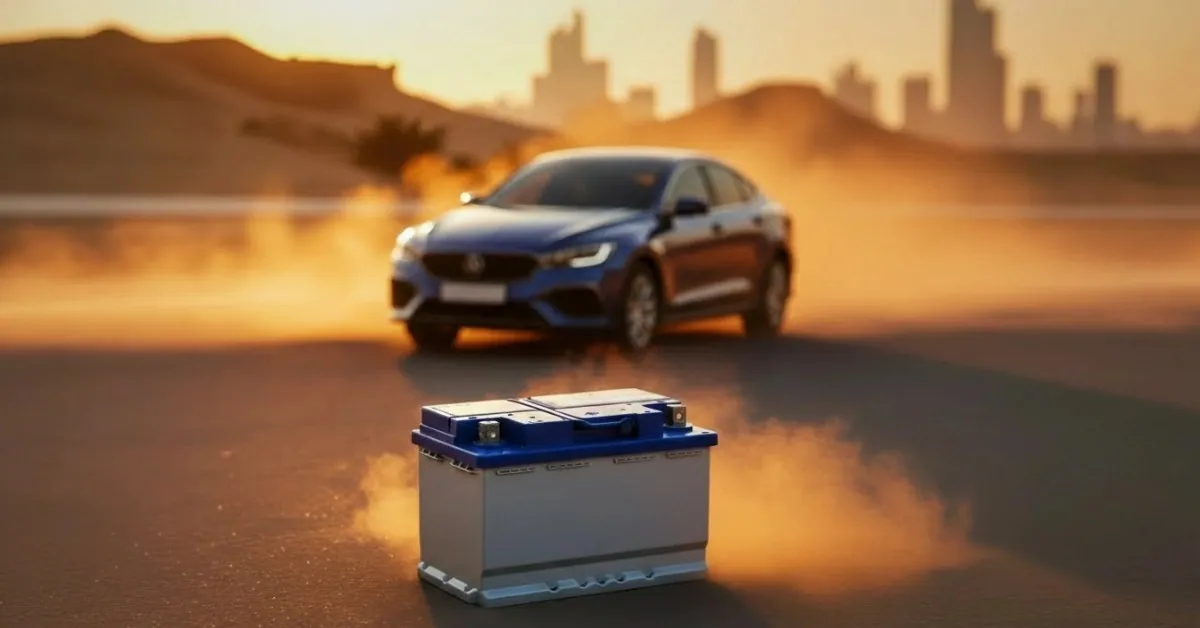
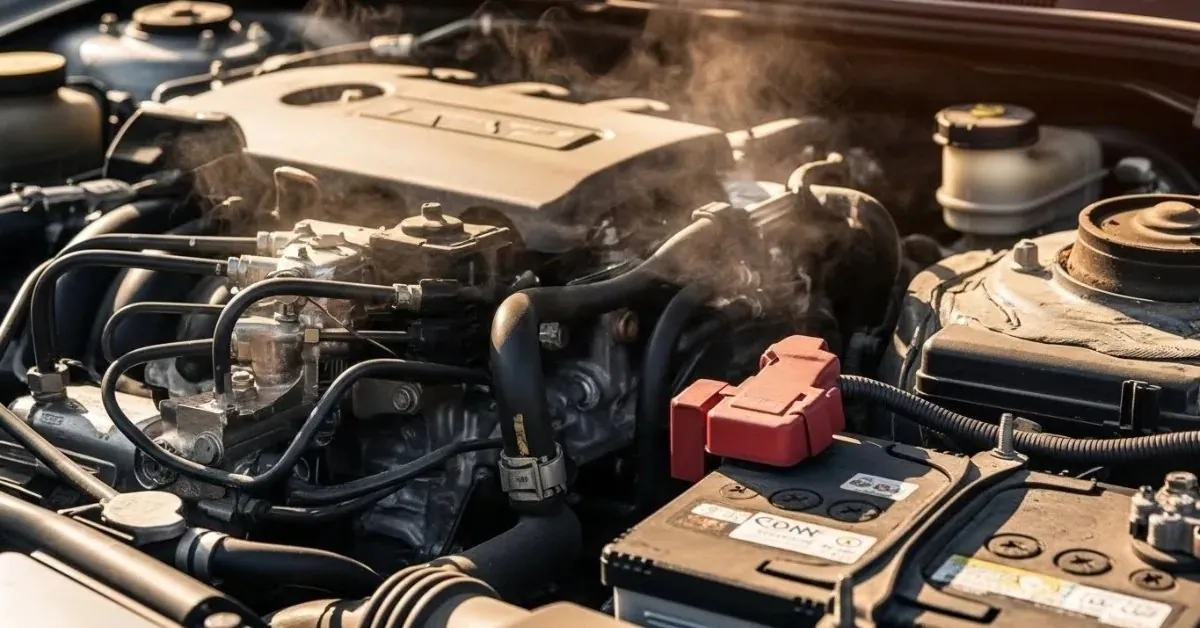
Summer in this city is brutal. You can retreat indoors to the air conditioning; the unit under your bonnet cannot. Plenty of motorists are caught out when it quits without warning in the hot months, and the reason is plain: fierce heat is among the worst things that can happen to a car battery.
We regularly find units that died young, worn out by temperature rather than by age. Below we explain the process, the clues to look out for, and how to keep a surprise breakdown off your calendar.
Why Hot Weather Does More Harm Than Cold
The common belief is that winter finishes batteries off. In some parts of the world it does. Here, though, the damage from heat comes quicker and does not heal.
Warmth makes the chemistry inside run faster. That might sound helpful, yet in practice it brings:
- Electrolyte boiling off sooner
- Harm to the lead plates
- A shorter working life
Under severe heat, a unit rated for four years can be finished after two.
Inside the Case on a Scorching Day
A standard lead-acid unit holds a liquid electrolyte, which it needs in order to store energy and give it back.
When the mercury climbs:
- That liquid disappears more quickly
- The parts inside lose strength
- The cells stop holding charge as they should
This kind of harm is permanent. The engine may fire up this morning and still refuse the next time the car sits out in the sun.
How Long They Last Here Compared With Elsewhere
Where summers are mild, expect around 4–5 years.
Locally the figure falls a long way:
- Typical use: 2.5 to 3 years
- Hard summer exposure: 1.5 to 2 years
That explains why flat batteries rank among the most frequent roadside call-outs across the UAE.
Clues That the Temperature Is Taking Its Toll
A dying unit seldom announces itself. The hints are minor and easily brushed aside.
Keep an eye out for:
- A starter that turns lazily
- Dash lights that flicker
- Feeble air conditioning just after you start
- A battery symbol glowing on the instrument panel
- Needing a boost from another car time after time
A Jump-start gets you moving today, but a car that keeps needing one usually has a unit close to the end of its life.
Why a Summer Failure Seems to Come From Nowhere
A common complaint: it started fine yesterday, so why is it dead this morning?
The wear accumulates quietly. A single scorching afternoon can tip an already weakened unit over the edge, and leaving the car in an open lot, above all on tarmac, drives its temperature higher still.
When the internal wear crosses a threshold, it just stops.
Brief Journeys Add to the Strain
Lots of local motoring is a few minutes at a time, and that brings a second problem: the alternator never gets long enough to top the charge right back up.
Gradually:
- It sits permanently short of charge
- The heat stress builds
- The plates deteriorate more quickly
Where the charging output is below par, a car alternator & dynamo repair may be what stops the failures coming back.
Newer Cars Feel It More
Recent models lean hard on electronics. Screens, sensors, cameras and control units all expect a stable supply.
Once heat has sapped the unit:
- Systems start misbehaving
- Fault warnings pop up
- The engine might not crank at all
That is why late-model vehicles are especially sensitive to a tired battery in this climate.
Habits Where You Park That Speed Up Wear
A few everyday routines shorten its life without you realising:
- Leaving the car in full sun
- Letting it stand idle for days on end
- Running accessories with the engine off
- Brushing off the first warning signs
Just forgetting a cabin light for a little while can flatten a unit that the heat has already weakened.
If It Dies While You Are Out
It can let you down anywhere: on your driveway, in the office car park or mid-traffic.
When the car cuts out:
- Keep calm and pull over somewhere safe
- Resist trying the ignition again and again
- Ring for roadside assistance so nothing else gets damaged
Where the unit is totally flat or the charging system has given up, a tow may be the only option.
Is It the Battery or Something Else?
Plenty of breakdowns have other causes, yet a large share begin with low charge.
Drivers sometimes suspect the fuel supply or a tyre when the true culprit is a sagging voltage, which can upset the fuel pump, the sensors and the safety systems.
If you are stuck, a car recovery crew in Dubai can take the vehicle away safely to be diagnosed and fixed.
Easy Protection Against the Summer
The weather is out of your hands; the harm it does is partly within them.
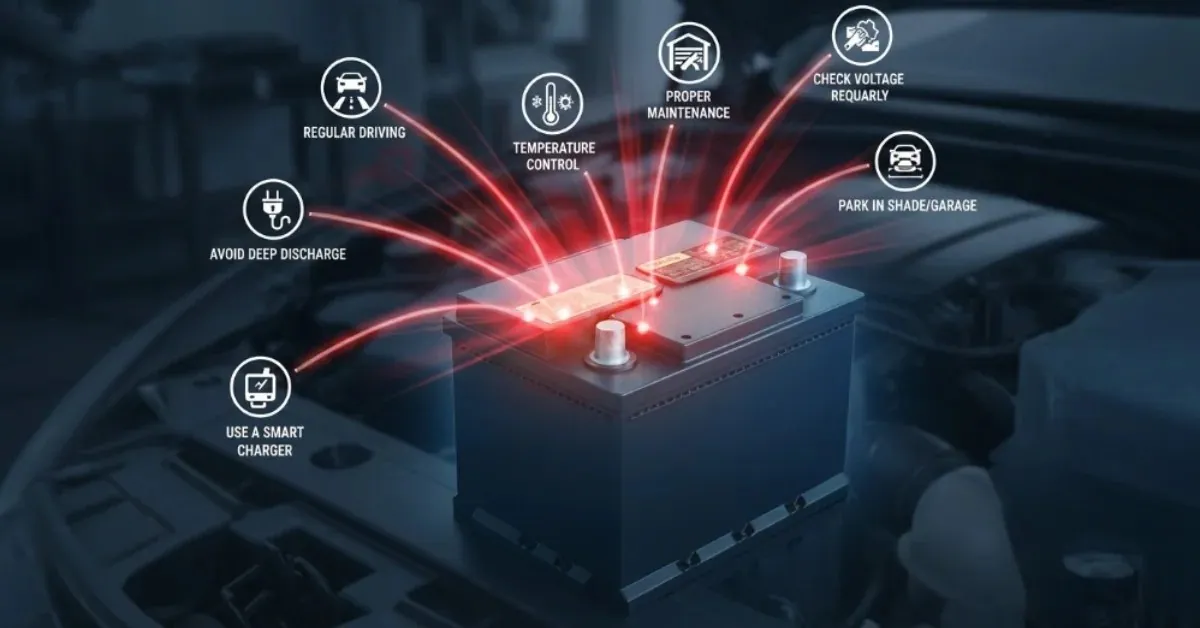
Try these:
- Use shade or covered parking
- Take the car out often
- Switch off gadgets before the engine
- Have the charge tested every 6 months
- Plan on replacing sooner than you would in a cooler country
Swapping it ahead of time works out cheaper than a breakdown call.
Knock-On Problems From a Weak Unit
Low charge can set off other trouble too:
- A soft tyre is missed because the sensor has no power
- Alerts stop doing their job
- A tricky situation turns into a worse one
Should several things go wrong together, a flat tyre change or emergency help will sort the immediate problem, but a healthy battery is what keeps the whole car dependable.
The Case for Regular Testing
A test takes minutes and costs little, and it flags a failure before it happens.
Routine checks from our technicians let you:
- Dodge an unexpected breakdown
- Spend nothing on a tow truck
- Set off in the summer without worrying
A quick voltage reading shows whether the unit is healthy or about to go.
In Short
The local climate does more than make a drive uncomfortable. Day by day it chips away at your car battery. Very few failures are true accidents; nearly all are wear from the heat adding up over months.
Knowing how temperature does its work lets you move early, sidestep a breakdown and keep safe on the move. A lazy start, a lit warning or a car that is completely dead: recognising the moment to call for help changes the outcome.
Stay alert, test regularly and get support in good time, and the unit will see you through even the harshest months of the year.
Battery trouble in Dubai? We come to you.
On-site testing, replacement and roadside help, 24/7 across the city.