The short answer
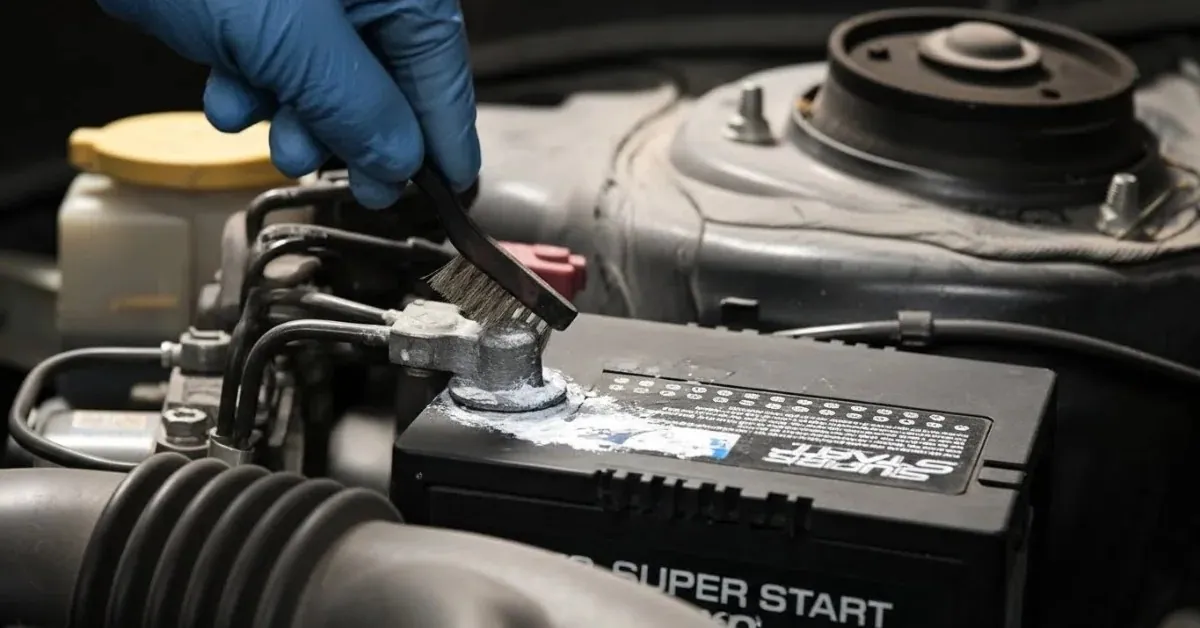
Many UAE motorists find a white or bluish crust on their battery posts. It blocks the current your car's electrics rely on, and left alone it brings sluggish starts or a battery that gives up entirely.
Clearing it is easy with the right precautions. Here we walk through each step and how to stop it returning.
What Causes the Crust on Battery Posts
The deposit forms where battery acid meets the metal posts and clamps. Knowing why helps you prevent it:
- Leaking electrolyte: acid can creep out of the casing and settle on the posts.
- Reaction with metal: that acid attacks lead and other metals and leaves a crusty residue.
- Age: a battery late in its life is far more likely to seep.
- Slack clamps: a connection that is not done up firmly invites deposits to build.
Ignored, it can harm the alternator and other electrical parts.
How to Tell Your Terminals Have Corroded
Look out for the following before you reach for a brush:
- A white, blue or greenish powder on or around the posts.
- An engine that is reluctant to start.
- Dashboard lights that flicker, or electronics acting oddly.
- A strange smell close to the battery.
Seeing one or more of these? Clean the posts, or book a professional inspection.
Cleaning the Posts Step by Step
A few simple items and sensible precautions are all it takes:
What to Have Ready
- Gloves and eye protection
- Baking soda
- Water
- A small brush, such as a spare toothbrush
- A rag or kitchen roll
- Petroleum jelly, if you want extra protection afterwards
Step 1: Isolate the Battery
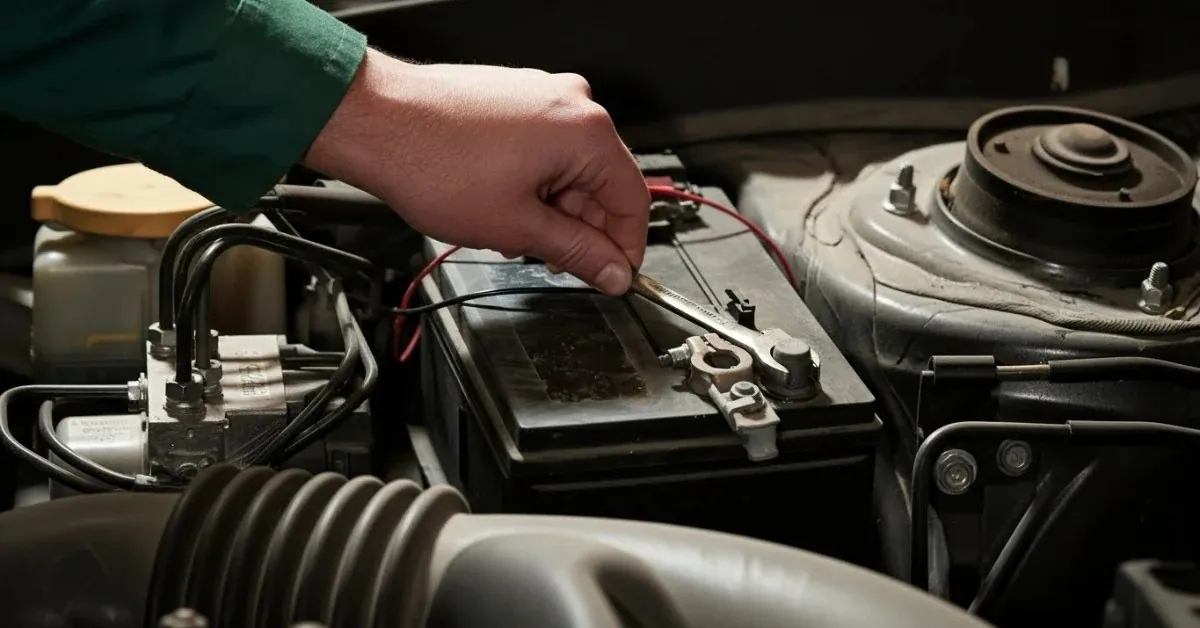
With the ignition off and the key removed, free the negative (-) clamp before the positive (+) one, so a stray tool cannot cause a short.
Step 2: Make Up the Solution
Stir a tablespoon of baking soda into a cup of water. It neutralises the acid without harming the battery or posts.
Step 3: Brush It On and Work It In
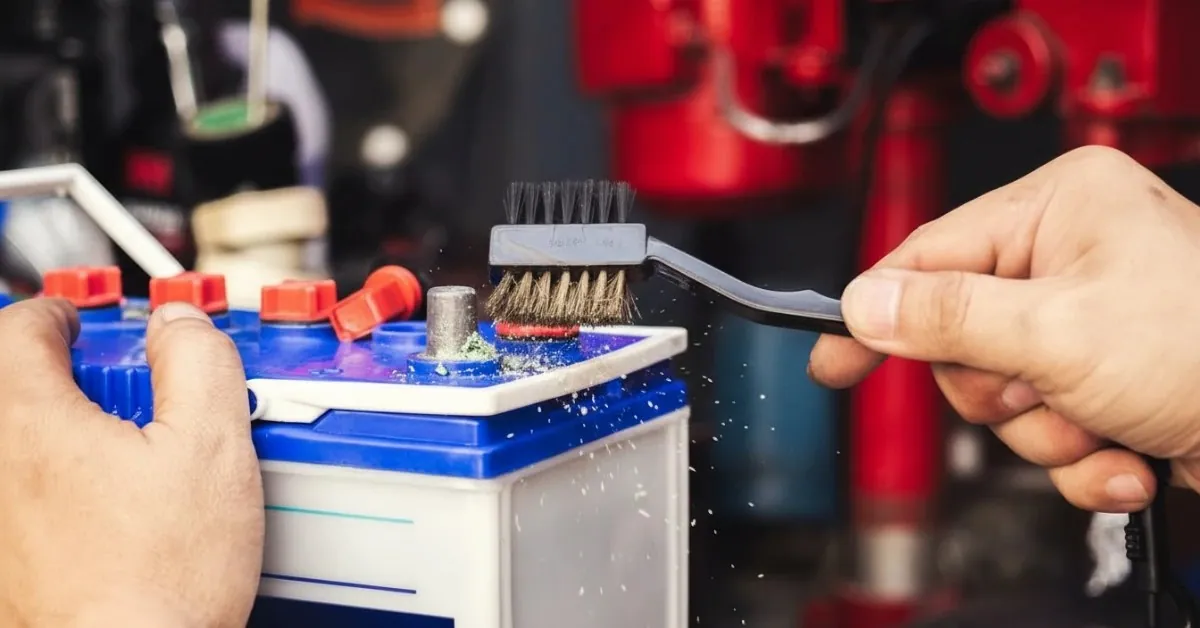
- Wet the brush in the mixture and work it gently over each crusted post.
- Expect some fizzing, which is the acid being neutralised.
- Wipe off what is left with your rag or kitchen roll.
Step 4: Rinse, Then Dry Thoroughly
Splash a small amount of clean water over the posts. Let them get completely dry before anything is reattached.
Step 5: Refit the Clamps
Put the positive (+) clamp back on first and the negative (-) one last. Do them up snugly, without cranking them too hard.
Step 6: Keep the Deposits Away
- Coat each post lightly with petroleum jelly.
- Check the posts now and then and wipe off small traces early.
- Keep the battery clamped down firmly, as vibration speeds up the build-up.
Worth knowing: repeated crusting or electrics that keep playing up can point to an alternator fault. An alternator and dynamo repair gets the battery charging properly and slows the corrosion.
When to Hand It Over to a Professional
A home clean-up does not always solve things. Get expert help when:
- The deposits are heavy or will not shift.
- The casing is swollen or acid is seeping out.
- The engine still labours to start after cleaning.
- You are not confident about working safely.
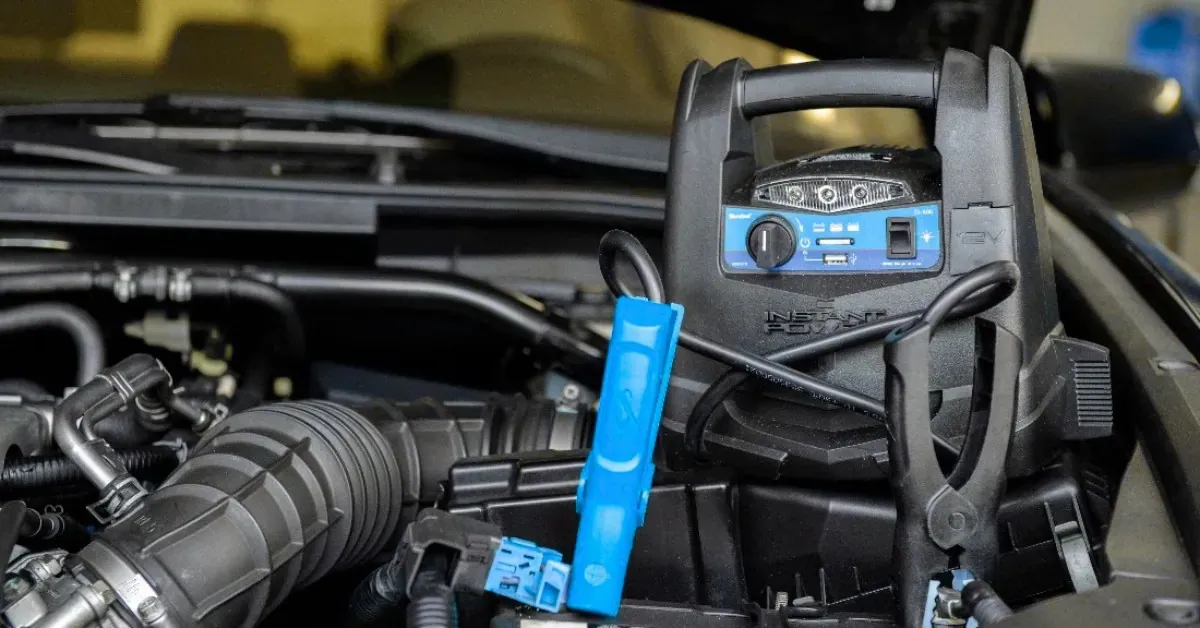
If a flat car battery stops you starting, roadside assistance, a jumpstart or a tow can get you moving anywhere in the UAE.
Why Looking After the Battery Pays
Care for the battery goes beyond scraping off deposits:
- More years of service: good upkeep can stretch a battery's life to as much as 5 years.
- Dependable starting: less chance of being caught out by a flat battery.
- Fewer electrical faults: the alternator and onboard electronics are protected.
- Lower bills: you avoid costly replacements and emergency call-outs.
Local heat speeds corrosion up, so regular checks matter more here.
More Advice for Drivers Here
- Inspect the posts no less than every three months.
- Keep them clean and dry, free of dust and damp.
- Drive regularly so the charge stays up.
- Switch off lights and gadgets whenever the engine is off.
- Call in a professional if the problem keeps returning or you are unsure.
These habits keep the car dependable and safe.
Summing Up
Clearing the posts is quick work that matters in this climate. The right kit, careful handling and regular checks keep the battery healthy, and if faults return after a clean, an alternator and dynamo check stops the cycle.
A well kept battery costs less and spares you awkward breakdowns on every journey across the Emirates.
Battery trouble in Dubai? We come to you.
On-site testing, replacement and roadside help, 24/7 across the city.