The short answer
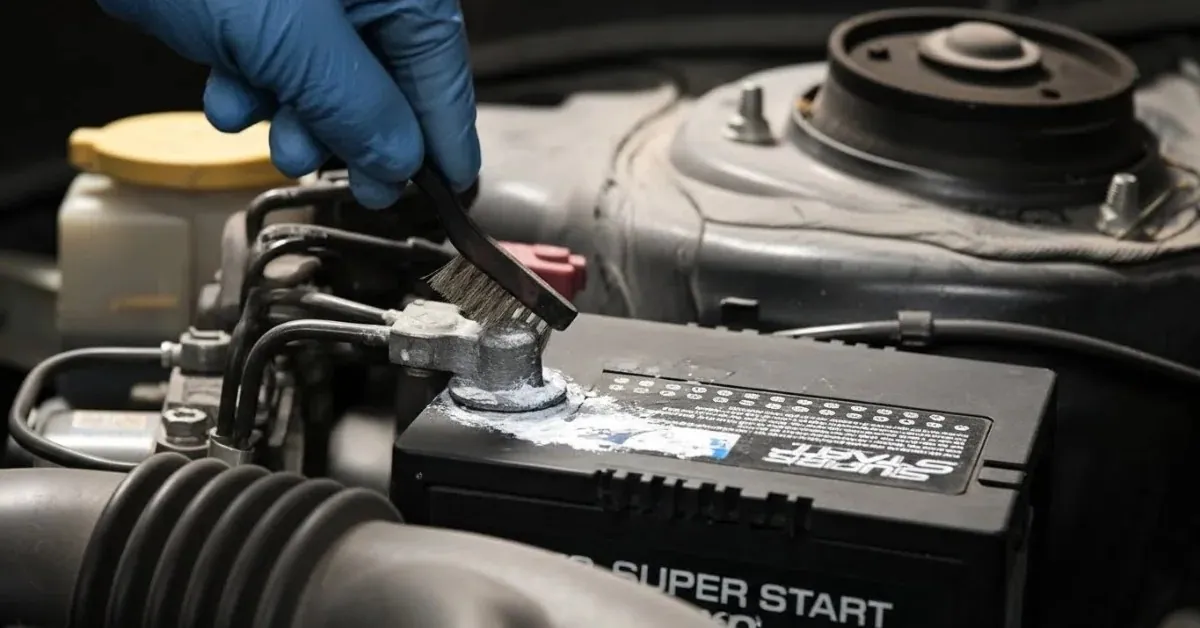
A flaky white or blue-green growth on the terminals is something drivers here run into often. That growth is corrosion, and it chokes the flow of current until the car may not start at all. You rarely need a garage for it: this is a job you can learn yourself, and it keeps the car dependable through the hot months.
Ordinary kitchen supplies such as baking soda deal with most cases right on your driveway. If the casing is damaged, or the battery still will not hold charge once it is clean, it is worth booking a car battery replacement in Dubai with a professional fitter so the car stays reliable.
Where Does the Crusty Build-Up Come From?
It helps to know the cause before picking up a brush. The typical car battery holds sulphuric acid, and as it warms and cools through the day it gives off hydrogen gas. That gas reacts with the metal posts and with moisture in the air, and the flaky deposit is the result.
Leave it in place and it behaves like insulation, stopping current reaching the starter, lights and everything else. A slow crank or weak lights can be the first clue. When the battery has deteriorated too far, a professional battery replacement may be what gets you driving again.
Staying Safe Before You Start
This job puts you close to both acid and live current, so treat the safety steps as compulsory rather than optional.
- Pick an airy spot: work outside or in a garage with the door open so you do not breathe the fumes.
- Cover your eyes and hands: goggles and heavy rubber gloves, since the acid can burn skin badly.
- Everything off: the ignition must be off and the key removed.
- Mind your tools: a metal tool that bridges the two posts at once will spark or, worse, short the battery.
Putting Your Kit Together
Most of what you need is probably already in the kitchen or garage. No special chemicals are required to get a tidy finish.
Option One, From the Kitchen:
- Baking soda, which does most of the work
- Clean water
- A spare toothbrush or a wire brush
- Microfibre cloths or kitchen roll
- Petroleum jelly (Vaseline)
- Spanners, most often 10mm
Option Two, In a Hurry:
- A can of cola such as Coke or Pepsi, whose phosphoric acid dissolves the deposit
- Any brush
- Water to rinse afterwards
The Baking Soda Method, One Stage at a Time
Of the two, this one neutralises the acid properly and leaves the terminals cleanest.
1. Take the Cables Off
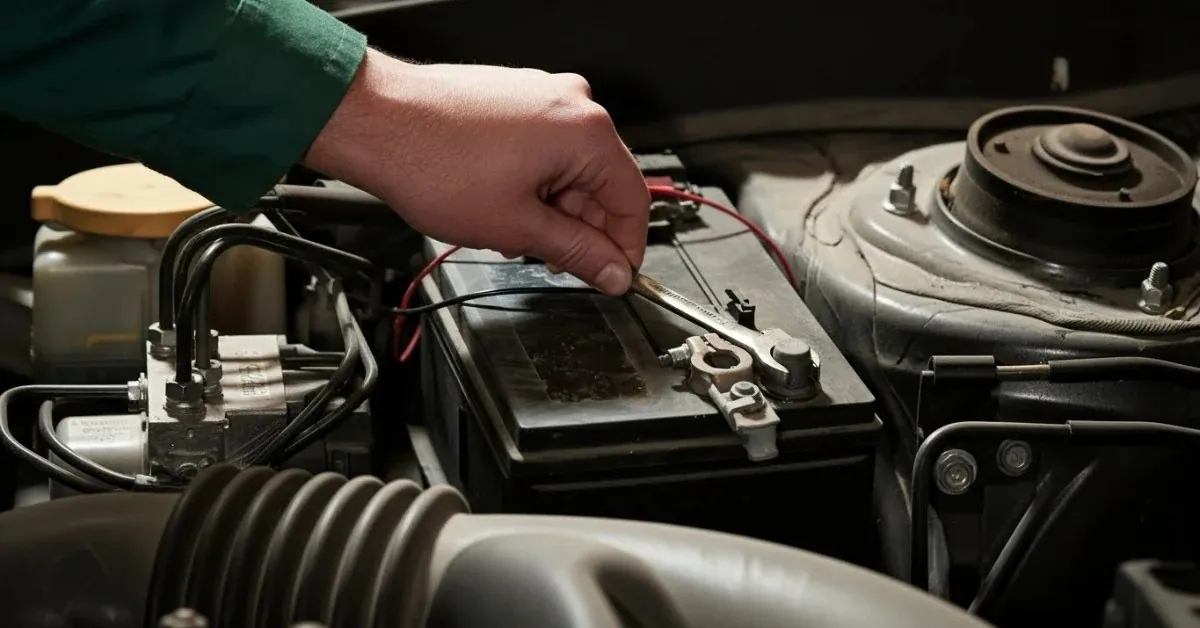
Get this part right above all else. The negative (-) lead always comes off first; it is normally black or carries a minus sign. Undo its nut with the spanner and work the clamp free. Then repeat on the positive (+) lead, which is normally red.
Pro Tip: freeing the negative first means a spanner that brushes the bodywork cannot create a spark.
2. Look the Battery Over
With the leads off, examine the case. A cracked or bulging battery is beyond cleaning, and one that leaks is hazardous and needs dealing with straight away. Stranded at home with a flat, leaking unit? Roadside assistance is the safer route to getting it swapped.
3. Pour On the Mixture
Dissolve one tablespoon of baking soda in a single cup of very hot water, stirring until clear. Tip it straight over the crusted terminals. The bubbling and fizzing you see is the soda neutralising the acid in the deposit.
4. Brush the Deposits Off
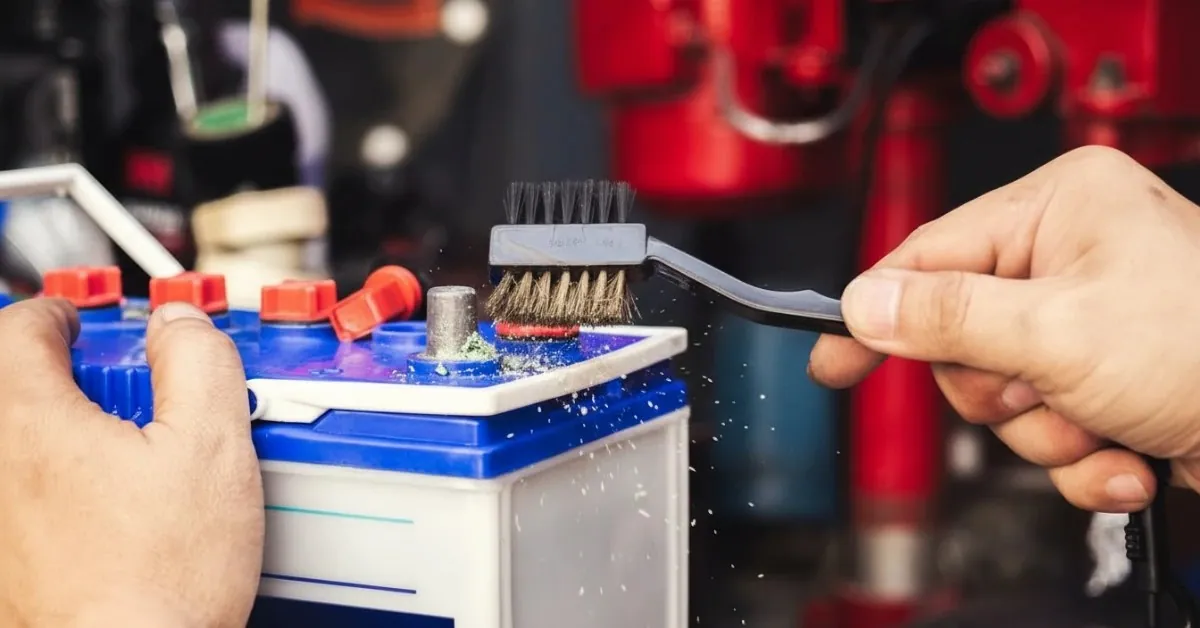
Scrub the posts and the cable clamps with the toothbrush or wire brush, including the inside of the ring where the clamp grips the post. Heavy growth may need a second dose of mixture and another round of scrubbing.
5. Rinse Off and Dry
Wash the soda away with a splash of plain water, then dry every surface fully with the microfibre cloth. Any damp left behind encourages fresh corrosion later on.
6. Protect the Posts
Ahead of refitting the leads, spread a light coat of petroleum jelly (Vaseline) or a dedicated terminal grease over the bare metal. It seals out damp and gas, so new corrosion forms far more slowly.
7. Refit the Leads
Work in the opposite order this time: positive (+) on first, negative (-) last. Do the nuts up until a firm pull on each lead will not shift it.
Clean Terminals, Yet No Start?
You can leave the terminals spotless and still be greeted by silence. A clicking noise as you turn the key usually means the battery itself is flat. Often a car jumpstart brings it back, though a battery beyond three years old may simply be due for replacing.
Looking After the Battery in the Local Climate
Summer temperatures here are hard on batteries. Heat accelerates the chemistry inside, so fluid is lost sooner and corrosion appears more often.
- Look monthly: lift the bonnet once a month so you catch corrosion while it is small.
- Keep it clamped: a battery that shakes about can be damaged inside, so check the hold-down is tight.
- Drive properly: brief trips never give the alternator time to recharge, so aim for a drive of at least 20 minutes each week.
Quick Reference Checklist
| Stage | What to Do | Reason |
|---|---|---|
| Safety | Gloves and goggles on | Guards against acid burns. |
| Disconnect | Negative (-) first | Avoids an electrical short. |
| Neutralise | Baking soda + Water | Stops the acid chemically. |
| Scrub | Wire brush | Lifts stubborn oxidation. |
| Protect | Smear on Vaseline | Keeps out damp and air. |
| Reconnect | Positive (+) first | Closes the circuit safely. |
The Last Word
Giving the battery a clean is a rewarding weekend chore that is done in under 20 minutes. It adds life to the car and spares you a dead engine on a morning when you are already running behind.
If no-start mornings keep happening, though, or you would rather we took a look, or the battery shows visible damage, do not gamble on it. Looking after the car's electrical core keeps it dependable on a city commute and on a weekend run out to the desert alike.
Battery trouble in Dubai? We come to you.
On-site testing, replacement and roadside help, 24/7 across the city.