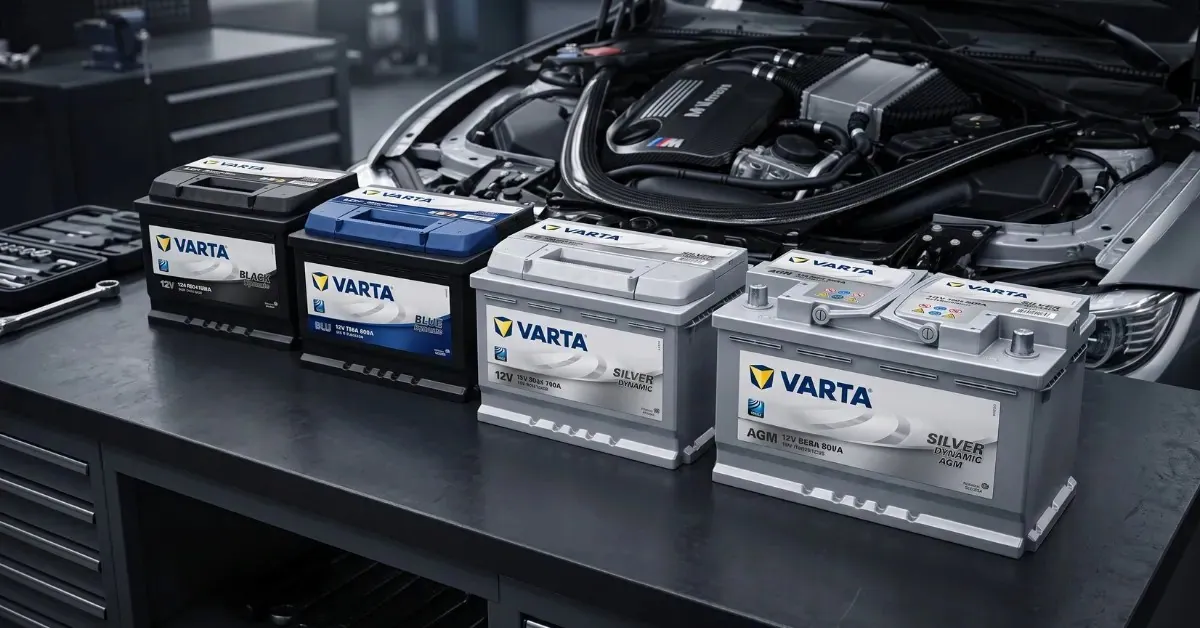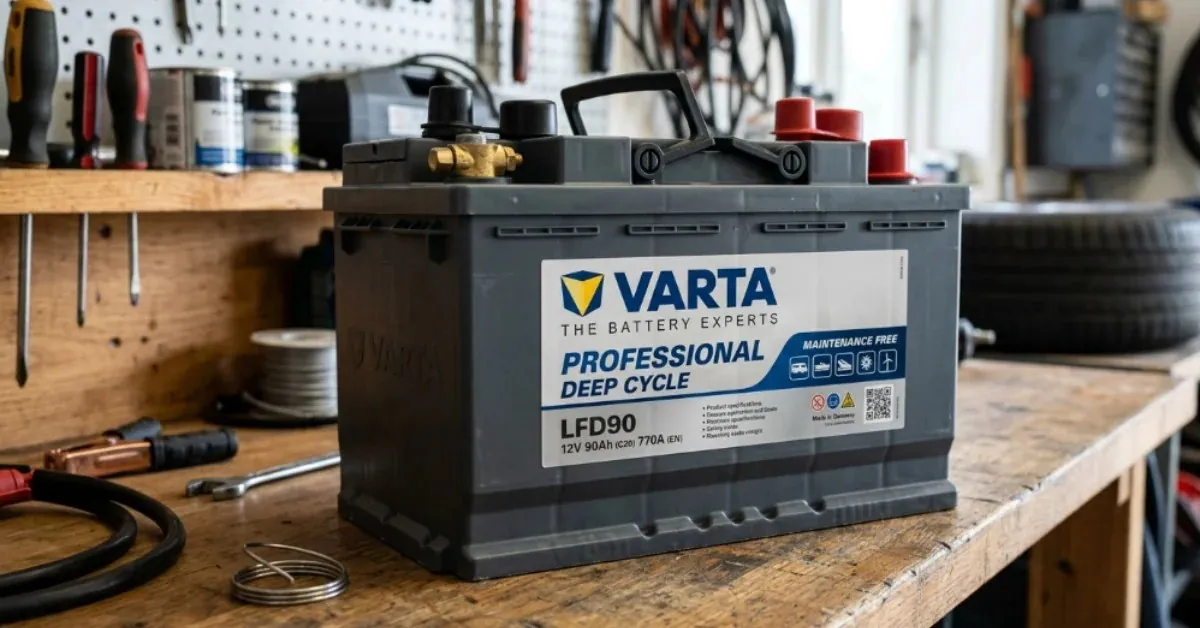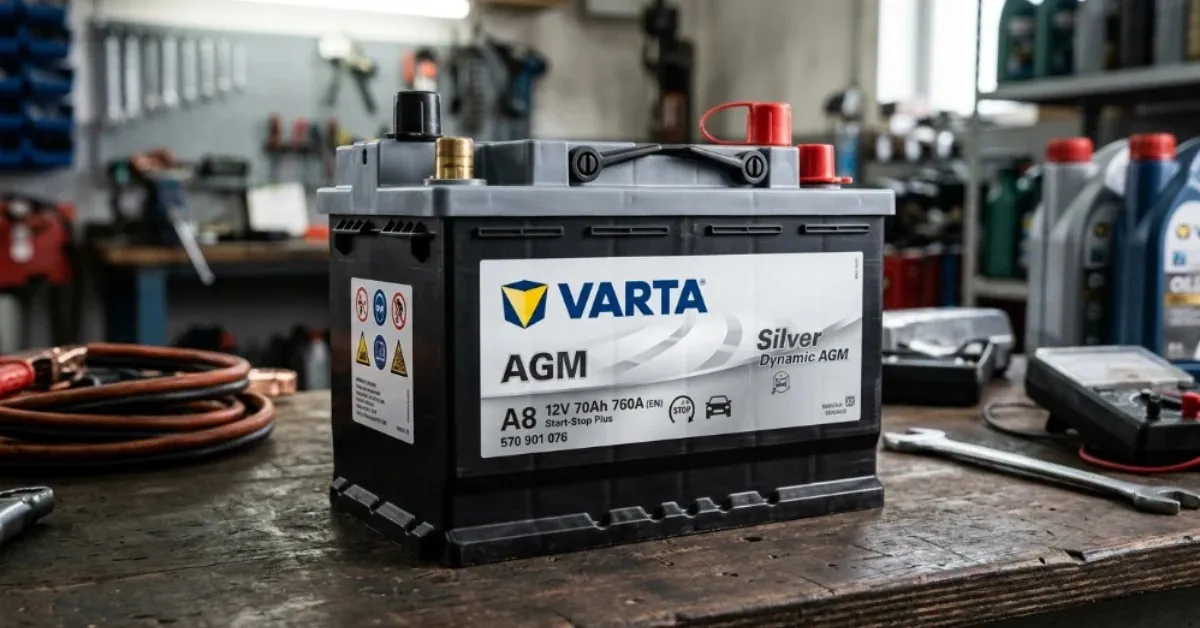
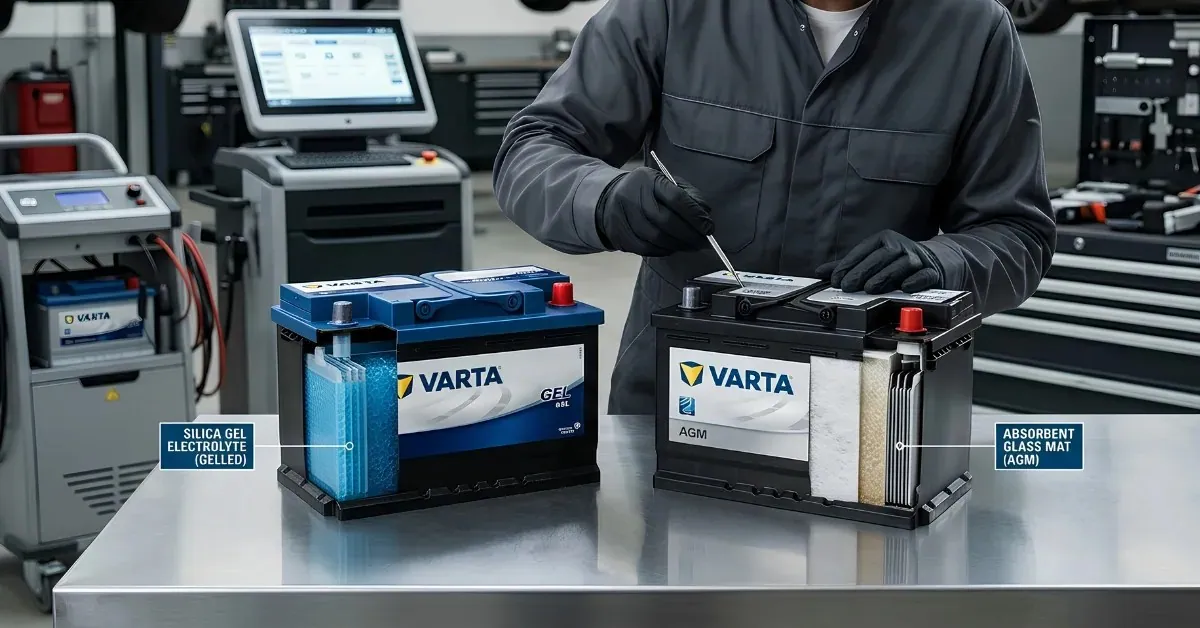
The short answer
Storing charge is only half of a battery's job. Pick the right chemistry and it performs better, lives longer and needs less care; put the wrong type on the wrong task and the results are disappointing.
Varta's gel battery is a sealed lead-acid design of the valve-regulated (VRLA) type, in which the acid is bound into a silica gel rather than left as a free liquid. Because the electrolyte cannot move, the unit will not leak and stands up well to vibration.
Its strength is a long, even supply for deep cycling, not a big starting surge. Set against AGM, gel copes better with being drained deeply time after time but needs a slower, more carefully controlled charge. You will find it in solar storage, boats, RVs, golf carts and other kit that relies on dependable power over long periods.
What Happens Inside a Gel Unit?
The chemistry is the familiar lead-acid reaction found in any conventional battery. What changes is the acid itself: sulphuric acid is blended with silica until it sets into a thick gel.
Instead of flowing around the case, that gel sits fixed between the lead plates. It keeps them completely covered and damps movement when the unit is shaken.
Gases formed during charging recombine into water inside the case, so topping up is never needed. A pressure relief valve lets gas out only under serious overcharging, which is why the design can be both sealed and free of routine maintenance.
The Key Components
1. Lead Plates
Positive and negative plates take in and give out energy through the chemical reaction. They are shaped to survive repeated charging and discharging without wearing badly, and good-quality plates raise efficiency and add to the unit's working life.
2. Gel Electrolyte
Here the electrolyte is a dense silica gel, not a liquid. It spreads the acid evenly over the plates and stops it spilling or seeping out.
Because that structure stays put, output remains steady even when the equipment is working in rough conditions.
3. Safety Valve
The valve-regulated design keeps internal pressure in check. In ordinary service the gases simply recombine within the case.
Only when poor charging drives the pressure too high does the valve open. That protects both the user and the cells from the harm excess pressure would otherwise cause.
4. Sealed Housing
A tough outer case shields the internals from dust, damp and shaking. As nothing can be opened, there are no water levels to check and no routine servicing to do.
That sturdy shell also lets the unit work in harsh settings and outdoors.
Why Does the Gel Matter?
Binding the electrolyte into gel changes how the unit behaves under stress. With no loose liquid inside, it keeps working safely when tilted or subjected to non-stop vibration.
That suits machinery that is always on the move or running over uneven ground. The gel also resists evaporation in hot weather, and since the electrolyte stays stable, the unit usually lasts longer through repeated deep discharges.
For those reasons gel is a common pick for renewable energy storage and leisure vehicles, where reliable running power counts for more than a fast engine start.
Gel Against AGM: How They Differ
Gel and Varta's AGM units are both members of the VRLA family, yet each is built for its own purpose. Seeing where they part company makes it easier to pick the right one for your equipment.
| Point of Comparison | Varta Gel | Varta AGM |
|---|---|---|
| Electrolyte | Dense silica gel | Acid held in a glass-fibre mat |
| Power Delivery | Gentle and even | Strong short bursts |
| Deep Cycle Performance | Excellent | Good |
| Cold Cranking Power | Lower | Higher |
| Charging Speed | Slower | Faster |
| Heat Resistance | Excellent | Good, though high heat takes a toll |
| Charging Sensitivity | Needs a controlled charge | More tolerant |
| Suited To | Deep-cycle duties | Engine starting and start-stop cars |
The main contrast lies in how each hands over its energy. AGM releases a heavy current the instant it is asked, which is ideal for cranking an engine. Gel lets its energy out gradually, so it does better over long stretches of use.
Deep Cycling in Practice
Coping with deep discharge is where gel shines. A deep cycle simply means running the unit down to a low state of charge on a regular basis before recharging it.
Plenty of ordinary batteries lose capacity fast when treated this way. Gel is constructed differently: the stable electrolyte shields the plates during constant cycling, so performance holds up over a great many charges.
That explains why it turns up in equipment that draws on stored energy all day rather than in quick bursts.
How to Charge a Gel Unit Properly
Charging correctly is essential if a gel unit is to give its longest service. It reacts to charging voltage more sharply than AGM does.
A suitable charger caps both the voltage and the current so the gel is not harmed. Rushing the charge or pushing the voltage too high can open voids inside the gel, and the loss of performance that follows is permanent. There is no repairing it afterwards.
To get it right:
- Choose a charger made for gel units.
- Stick to the charging voltage the manufacturer specifies.
- Steer clear of fast charging.
- Never let the unit sit deeply drained for long.
- Recharge it after every deep discharge.
Charge it the right way and its life stretches considerably.
What You Gain With Gel
The technology brings a set of practical benefits that suit tough working conditions.
Chief among them:
- No upkeep: the sealed case removes any need to add water, cutting maintenance while the unit stays dependable year after year.
- Cannot spill: because the acid is locked in gel, the unit is safer to carry, fit and run in a range of positions.
- Shrugs off vibration: the firm gel supports the internal parts, limiting damage from constant motion and rough use.
- Long deep-cycle life: it takes repeated deep charge and discharge cycles and keeps performing steadily for a long service life.
- Copes with heat: the gel resists drying out, so output stays consistent even in a hot climate.
- Slow self-discharge: stored energy lingers during idle spells, so the unit is ready to go after a long lay-up.
- Mount it as you like: the sealed, leak-proof build allows safe fitting in different orientations with no acid escaping.
- Gas recombination: gases turn back into water while charging, keeping water loss minimal and the unit free of maintenance.
Together these make gel a trustworthy option wherever steady, long-running power is needed with very little looking after.
Where Does a Gel Unit Make Sense?
1. Solar Power Systems
Solar storage cycles the battery every single day. Gel handles that routine while keeping its capacity steady over the years, and its long cycle life makes it a sound option for homes and off-grid installations alike.
2. Recreational Vehicles (RVs)
A parked RV relies on its battery for lights, the fridge, the water pump and other extras. Gel's steady discharge suits that pattern well, supplying even power across long trips with no regular maintenance.
3. Marine Applications
On a boat the battery lives with constant vibration and can go a long time without a charging point. Gel resists the shaking while running navigation gear, trolling motors and other onboard equipment, and its sealed case lowers the chance of acid escaping in a wet environment.
4. Golf Carts and Mobility Scooters
Electric runabouts of this kind, buggies on the course and scooters for getting about, depend on deep-cycle power. Gel gives them long running times between charges, and because it recovers well after repeated deep discharges, daily performance stays reliable.
5. Touring Motorcycles and Powersports
Big touring bikes, quad bikes and jet skis fitted with sat-nav, heated grips or other added electronics benefit from gel's stable supply. It keeps those accessories powered through long rides and days outdoors.
Should You Put Gel in an Everyday Car?
Usually, no.
A passenger car needs a big current delivered instantly to turn the engine over. AGM does that far better, with more Cold Cranking Amps (CCA), plus a quicker recharge once the engine is running.
Gel will turn over certain engines, yet it was never made for repeated high-current starts. Fitted in an ordinary car, it may wear out sooner and hold performance back.
If your vehicle has start-stop or a heavy electrical load, AGM is normally the unit to choose for a new car battery.
What Lifespan Can You Expect?
Life depends on the conditions it works in, how it is charged, the temperature and how deeply it is drained. Looked after and charged correctly, a good gel unit commonly gives several years of dependable service.
Regular overcharging, draining past the recommended limit or the wrong charger can cut that short considerably.
Keep to the manufacturer's charging guidance and use the unit only for jobs it is designed for, and it will serve as long as it can.
Conclusion
Choose a Varta gel battery wherever you need dependable deep cycling, long running times and next to no maintenance. The silica gel gives a sealed, spill-proof unit that resists vibration, tolerates repeated deep discharges and copes with hot weather.
AGM stays the better pick for starting engines and heavy current draw, while gel belongs in solar storage, marine kit, RVs, golf carts and other jobs that want a steady supply.
For a genuine Varta unit fitted properly, we supply authentic stock, offer straight advice on which type suits your vehicle or equipment, and carry out Varta replacements quickly.
Battery trouble in Dubai? We come to you.
On-site testing, replacement and roadside help, 24/7 across the city.