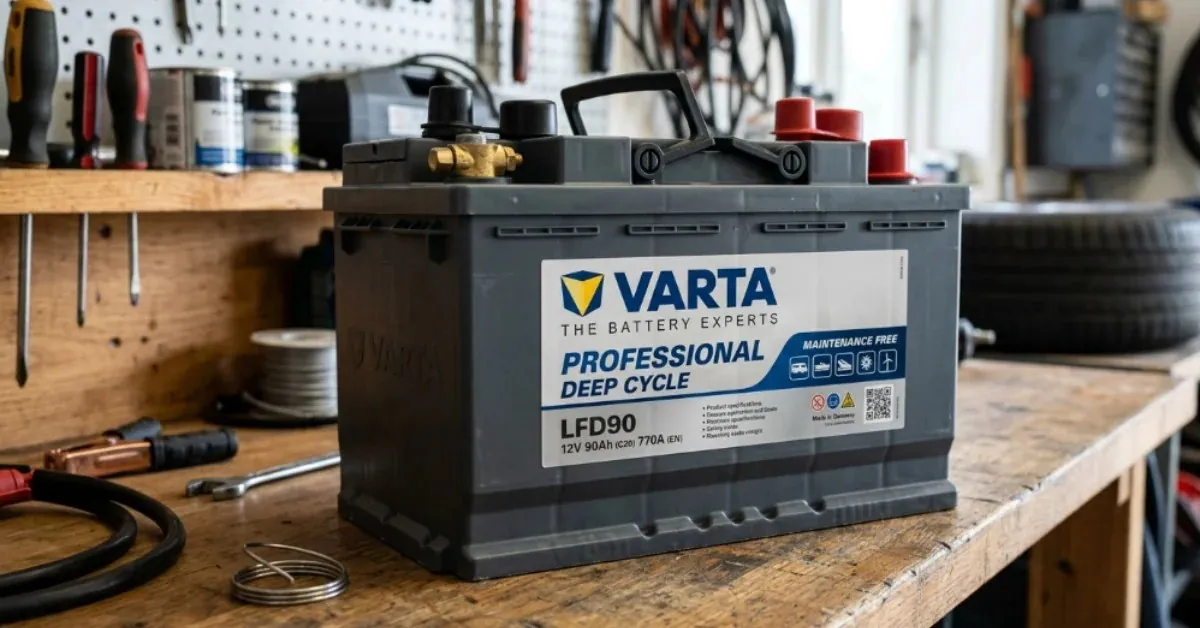
The short answer
Choosing power for a boat, a caravan or a set of solar panels means wading through types and figures, and a poor pick can leave you without electricity exactly when you need it most.
Varta's deep cycle units exist for that job. They supply even, lasting power and tolerate being run down over and over. The range comes in three families: AGM, Dual Purpose and Flooded.
Voltage, capacity and charging needs differ from family to family, and service life sits anywhere between two and five years, according to how the unit is used and looked after. Below, each point is set out in everyday language so you can choose with confidence.
What Does a Deep Cycle Unit Do?
A deep cycle unit from Varta is designed to be run down and recharged again and again while keeping its capacity. A starter battery hands over one short, heavy burst to crank an engine; this type releases a gentle, even flow for hours.
That makes it a favourite for solar storage, boats, caravans and motorhomes. Most versions come sealed and never need topping up, and they shrug off shaking and knocks, which suits life on the water or off the road.
A big draw for owners is service life: in repeated cycling, these units go through many more charge cycles than a standard starter battery.
The Three Families in the Range
Varta divides its deep cycle line into three groups, each designed around a particular task. Knowing which task you have is most of the decision.
1. Professional Deep Cycle AGM
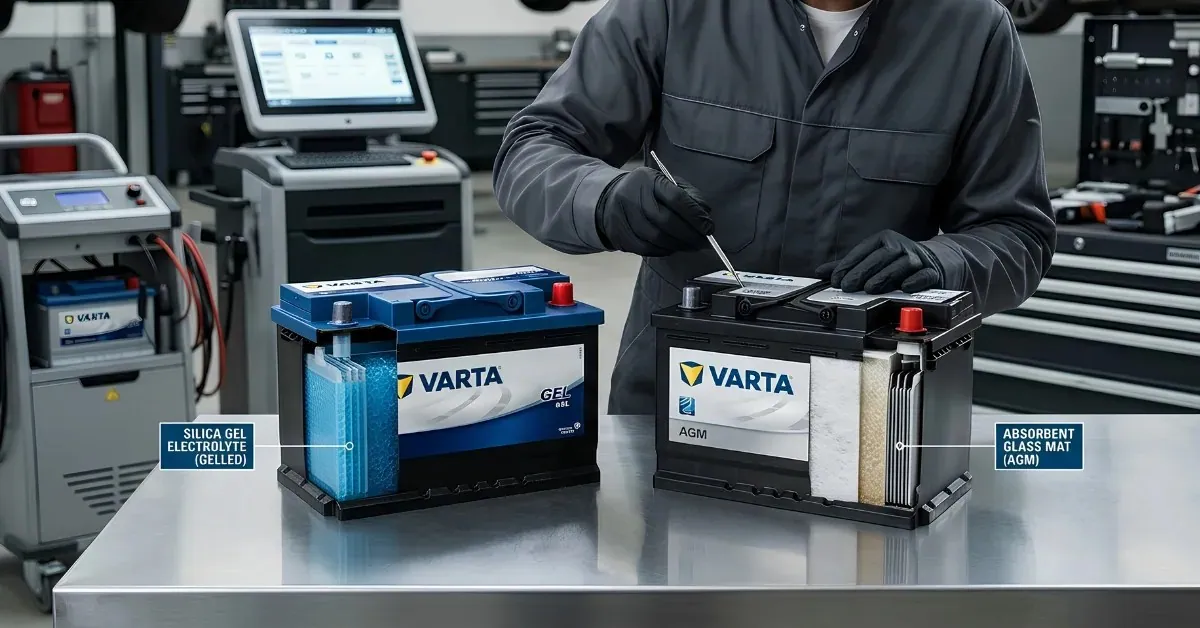
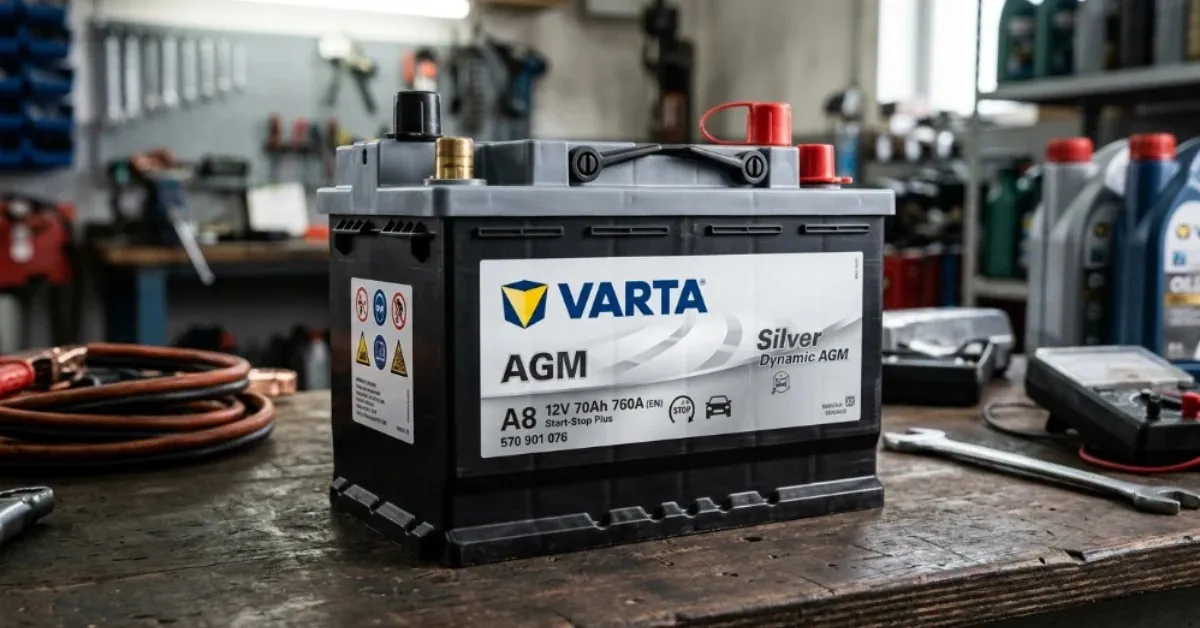
Here the acid is soaked into an Absorbent Glass Mat (AGM) rather than sloshing about as liquid. The result cannot leak and can be mounted on a slant.
It copes well with hungry loads such as a television, a laptop or a coffee machine aboard a boat or motorhome. Discharging it to 50% to 80% costs it little life, and Varta rates it at up to eight times the cyclic stability of a conventional battery, or up to 800 cycles at 50% depth of discharge.
2. Professional Dual Purpose
One case, two roles. It can deliver the heavy surge that turns an engine over, and it can also feed a low, steady current to lights, fans or small appliances.
Self-discharge is very low, so it keeps its charge through long lay-ups, a winter in storage for example. That suits a seasonal boat or a caravan left parked for months at a time.
3. Professional Deep Cycle Flooded
A traditional wet lead-acid design, made tougher. Its plates are thick and rich in antimony, and the electrolyte uses a special formulation.
Those changes let it last through a high number of charge cycles. It is a good match for golf buggies, utility vehicles and similar traction duties where the draw is steady and repeated.
Specifications and Capacity Ranges
The table sets out voltage, capacity and the main strengths of every Varta series.
| Series | Voltage | Capacity Range | Main Strengths |
|---|---|---|---|
| Professional Deep Cycle AGM | 12V | 24Ah – 260Ah | No upkeep, cannot leak, tough against shocks |
| Professional Deep Cycle (Flooded) | 6V / 8V | 170Ah – 232Ah | Thick, dense plates and a long cycle life |
| Professional Dual Purpose AGM | 12V | 60Ah – 105Ah | Quick to recharge, handles starting and house loads |
| Professional Dual Purpose Flooded | 12V | 60Ah – 230Ah | Even cycling for moderate power demands |
Use these figures to compare what you have now with a Varta equivalent. Match the voltage before anything else, then choose a capacity sized to what you draw each day.
Where These Units Earn Their Keep
The range covers most off-grid and leisure jobs. Typical uses:
- Boats and yachts: lighting, navigation instruments and the electronics on board.
- Motorhomes and caravans: fridges, fans and USB points when there is no hook-up.
- Solar installations: holding daytime energy for the evening or an overcast day.
- Golf carts and utility vehicles: steady drive power lap after lap.
- Long storage: the Dual Purpose models keep their charge through months of standing.
Every use leans towards a slightly different type, so add up what your appliances draw before you settle on one.
How Should You Charge One?
Good charging habits add years of service. These steps keep the unit in good shape for longer.
- Step 1: Use a suitable charger. A smart charger with an AGM or sealed setting is the one to have, because an ordinary charger can apply too much voltage and do harm.
- Step 2: Know which type you own. AGM and Dual Purpose units call for a sealed-battery charger; flooded units need a regular deep cycle charger plus checks on the water.
- Step 3: Look inside flooded units now and then. Their water level needs checking from time to time, though Varta's flooded models ask for less attention than older designs.
- Step 4: Do not run it flat every time. On most cycles, stop before you pass 50% depth of discharge, as draining it deeply again and again shortens its life.
- Step 5: Favour a slow charge. A gentle, even charge treats the plates far better than a rapid one, which creates heat and strain.
- Step 6: Take care in hot weather. Heat speeds up wear, so charge in the cooler part of the day and keep the case out of direct sun.
- Step 7: Put it away full. Top it up before any long lay-up, because sitting at a low charge while idle robs it of capacity.
What Decides How Long It Lasts?
Heat, charging routine and how far the unit is drained each cycle set its life. In the UAE's high temperatures, units with good heat tolerance hold out longer.
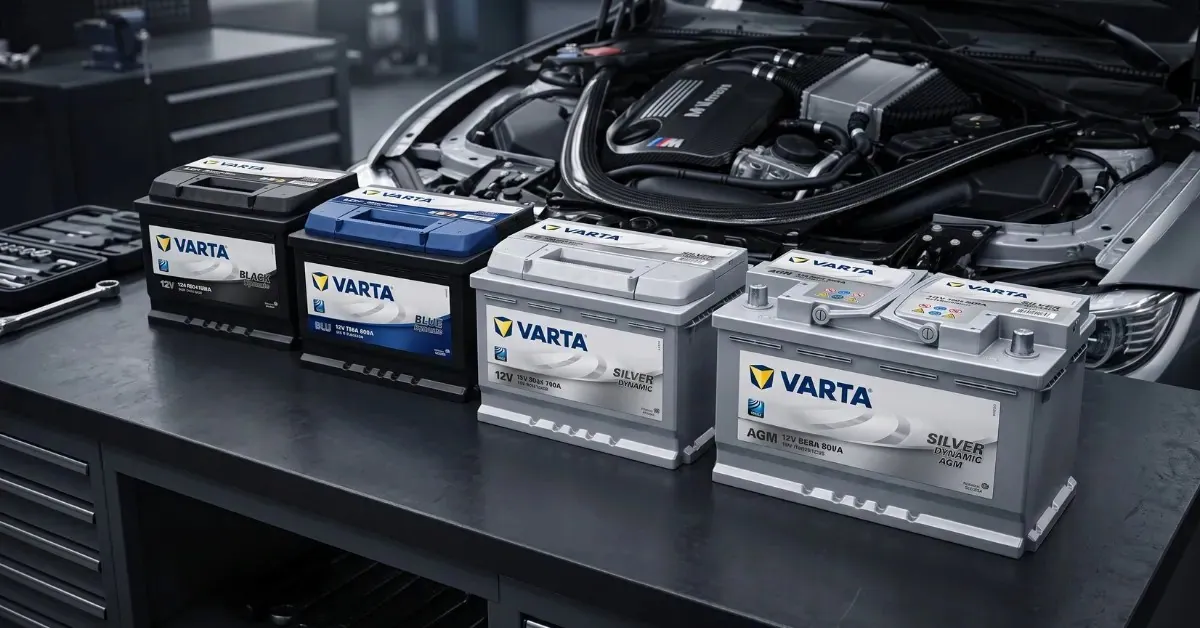
For a local reference point, market figures for Varta's car ranges show Blue Dynamic with high heat tolerance, lasting roughly two to three years and costing 300 to 520 AED. Silver Dynamic has very high heat tolerance and a comparable two- to three-year life, at 600 to 950 AED.
Silver AGM has the strongest heat protection, lasts three to four years and sells for 750 to 1400 AED. A local supplier's deals, plus the size class and physical footprint of the unit, will nudge those numbers up or down.
What Makes the Range Stand Out
A handful of design points separate these units from everyday batteries.
- Spill-proof AGM build: the mat locks the electrolyte in, so nothing escapes if the case leans over. You can fit it in a cramped locker on a boat or a motorhome without fear of acid damage.
- Nothing to top up: AGM and Dual Purpose models never need water. That is a real saving for anyone who takes the boat or the van out only at weekends or in certain months.
- Built for shaking: sturdy cases and dense plates cope with corrugated tracks and choppy seas, which makes them dependable on desert runs, off-road trips and rough crossings.
- Slow self-discharge: charge holds through long storage, which is what a seasonal vehicle or boat needs. Leave it idle for weeks and it should still be ready without a top-up charge.
- Quick-fill caps: the flooded industrial models have caps that open with a single twist and let you refill every cell in one go. That trims upkeep and keeps golf carts and utility vehicles ready for hard daily work.
The sum is a unit that asks for less attention and supplies more dependable power across its life.
Conclusion
If you need even, long-running power for a boat, a caravan, a solar array or a golf cart, a Varta deep cycle battery makes good sense. It comes as Flooded, Dual Purpose or AGM, each family matched to particular loads and charging routines.
Capacities run from 24Ah to 260Ah, so almost any setup has a size to suit. Given careful charging and protection from heat, service life can stretch to five years. The right model is the one whose series matches your voltage, capacity and pattern of use.
Planning an upgrade? We stock genuine Varta units, and our technicians handle car battery replacement at your location too.
Battery trouble in Dubai? We come to you.
On-site testing, replacement and roadside help, 24/7 across the city.