The short answer
A battery in good shape is what lets the car start every time and keeps you from breaking down in heavy traffic. Checking it now and then costs you a few minutes and can save you paying for a replacement you did not need.
A needle-type meter makes the check easy and gives a trustworthy picture of the battery. With it you can read the voltage, pick up a weak cell and keep an eye on how the battery is holding up over time.
Drivers in Dubai, Sharjah and the surrounding areas can use the steps below to get to know their battery, test it properly and make it last longer.
What Does a Multimeter Do on a Car?
It is a hand-held instrument for measuring the electrics in a vehicle. In a couple of minutes it will check the battery, the alternator and the fuses, and show you whether the wiring is sound. Staying on top of this means the engine keeps starting through the summer, and noticing lights that have gone dim lets you act before a breakdown.
On a car, its main job is reading voltage, the electrical pressure the battery holds. Put the probes on the terminals and you can see at once whether the battery has the strength to turn the engine over. It is a safe job that any driver can manage.
Today's cars depend on a great deal of electronics. A meter can trace a broken wire or a poor connection in moments, which helps protect the car's control units and keeps it dependable.
What Does a Regular Battery Check Get You?
Knowing how your car makes and stores electricity is the starting point for trouble-free motoring. The battery feeds the starter, the ignition and every electronic system on board. Checking it regularly:
- Stops you breaking down without warning in traffic
- Keeps the battery performing well for longer
- Means you replace it only once it has truly worn out
A needle meter gives a direct and exact reading, so you can judge the battery for yourself without depending on digital gadgets alone.
The Kit for a Needle-Meter Test
Have everything to hand before you start and the check will be quick and tidy. None of it is specialist, and any driver can use it.
- The meter itself: a good-quality analog multimeter with an easy-to-read needle scale for DC volts.
- Insulated test leads: a red one for positive and a black one for negative.
- Gloves: to keep grime and any acid residue off your hands.
- A wire brush: for scrubbing corrosion and white deposits from the terminals.
- A clean rag: to wipe the top of the battery so the contact is better and safer.
- Eye protection: to shield your eyes while you work in the engine bay.
The Voltage Figures You Need to Know
These few numbers are the key to reading any result. Nearly every car runs a 12V lead-acid battery, and these are the levels that count:
- Full charge: 12.6V – 12.8V
- A little low: 12.4V – 12.6V
- Low: under 12.4V, a recharge may be due
- Very low: under 11.8V, replacement is urgent
With these values in mind, the needle's position makes sense. Watching them helps the engine start dependably in the UAE heat, and holding the battery in the right band keeps the car ready for any trip.
Testing the Battery With a Needle Meter, Step by Step
These steps give you a true picture of the battery's condition and help keep it performing safely for longer.
Step 1: Set the Meter and Attach the Leads
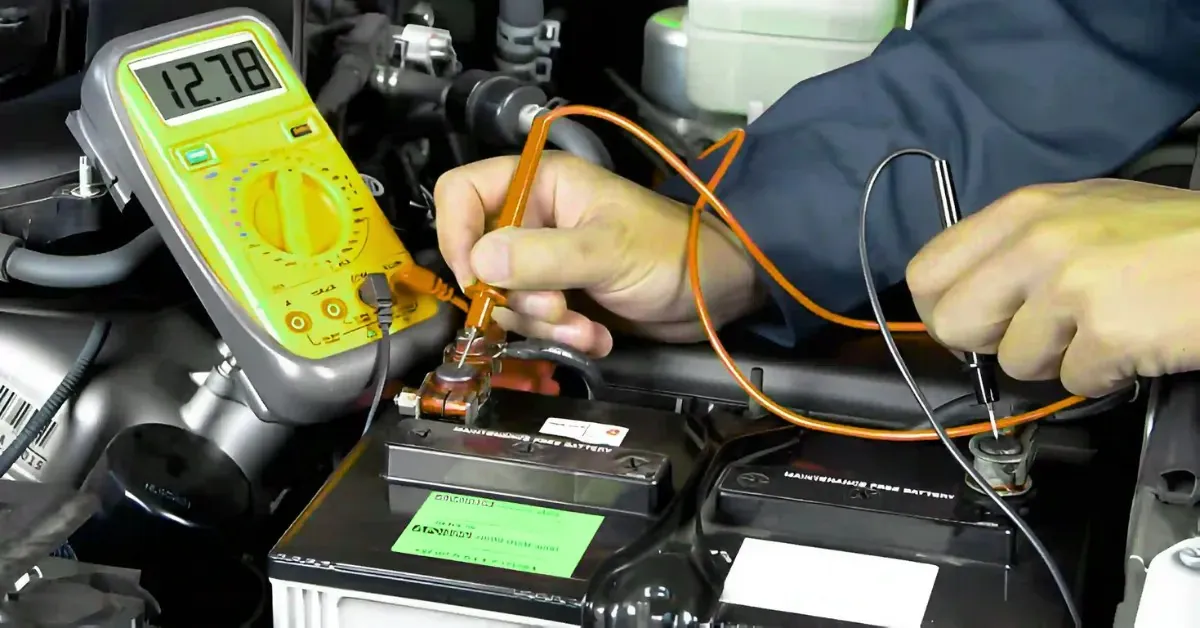
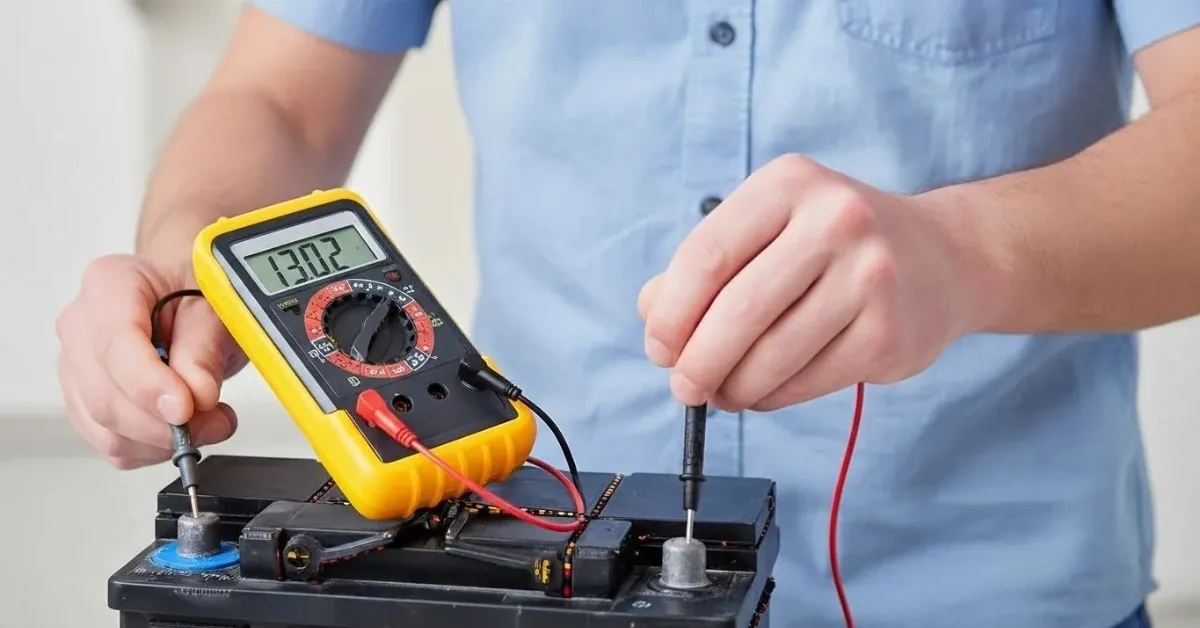
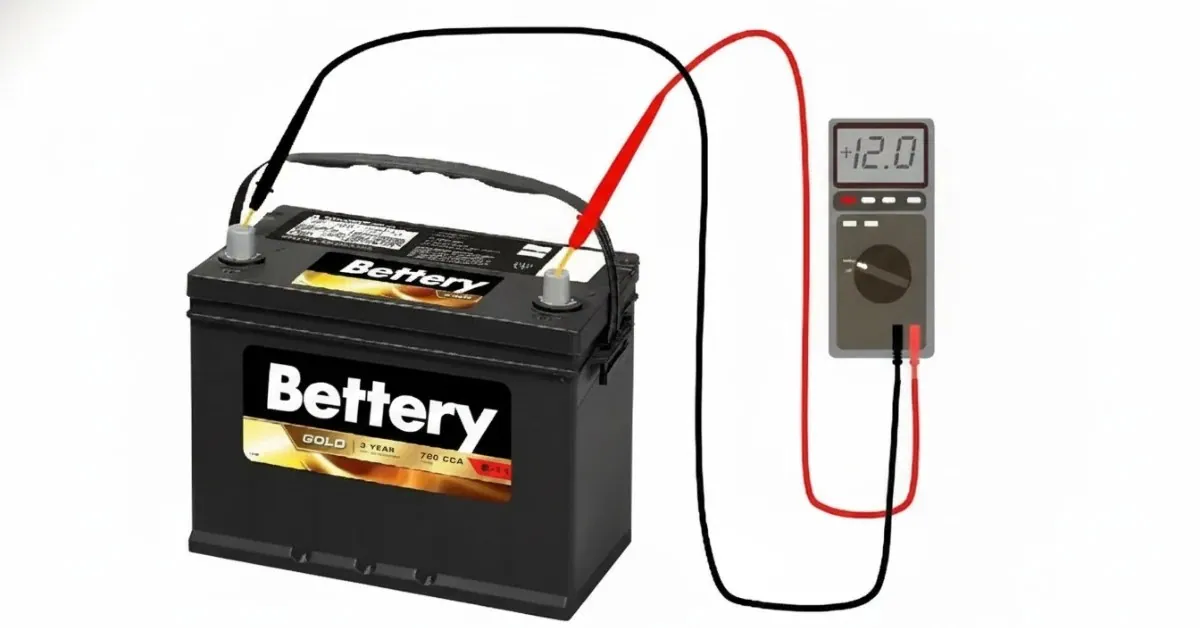
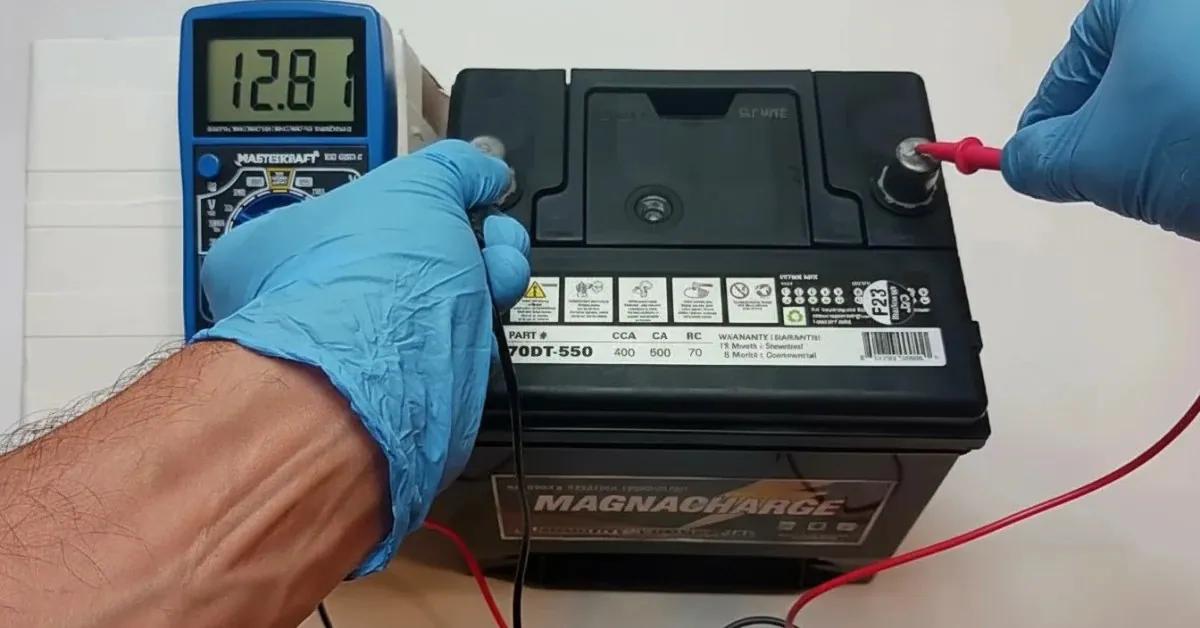
Turn the selector to the 20V DC range, or the nearest DC range above 12V if your meter has no 20V setting. Put the red lead on the positive terminal and the black lead on the negative. Press both tips firmly onto bare metal so the needle settles.
Step 2: Read the Resting Voltage
With the engine switched off, see where the needle comes to rest. A good battery sits between 12.6V and 12.8V. If it points below 12.4V, plan to recharge before long.
Step 3: Put It Under Load
Switch the headlights on for two minutes to give the battery a real job to do. Watch how far the needle falls in that time. A drop to below 12V strongly suggests the cells have weakened.
Step 4: Make Sense of What You See
A 12.6V reading means excellent order, fit for the road. Under 12.0V it is failing and may not have long left. Test with the car cool for the most dependable figures.
Step 5: Look After the Battery Between Tests
Keep the terminals clean so corrosion cannot choke the flow of current. Give the car longer runs now and then so the alternator can fully recharge the cells. Recheck the voltage every three months to keep performance steady.
Step 6: Stay Safe While You Work
Wear gloves and safety glasses before handling any electrics. Keep spanners and other metal away from the battery so nothing bridges the terminals and sparks. Never test a unit with a leak or visible damage; leave it well alone.
Getting a True Reading From a Needle Meter
A few habits used by professionals make each reading exact and repeatable. They take seconds and get the best out of an analogue instrument.
- Set the zero: turn the adjustment screw until the needle rests exactly on zero before you begin.
- Look square on: read the scale from directly in front, not at an angle, so parallax does not shift the figure.
- Clean contacts: make sure the terminals are free of corrosion so current flows without interruption.
Heat: test once the engine has cooled, because a very hot battery can show a voltage that is briefly higher than its true one.
In Short
Keeping watch on the voltage is an easy way to keep the car dependable. A few home checks spare you the worry of a sudden breakdown, and catching a problem early protects the alternator and wiring from lasting harm.
A battery in good health turns the engine over without fuss, hot weather included. Checking ahead of time flags a power fault while you can still choose where to deal with it.
If low figures keep coming back, arrange a car battery replacement by a professional and the car will perform properly again. We can fit one for you and keep the car ready for the road.
Common Questions
How many years does a battery usually last in the UAE?
In this region most batteries manage 2 to 3 years, because the summer heat is so severe. It speeds up the chemistry inside, so the fluid is lost sooner and the internals corrode faster.
Is it all right to test straight after a drive?
Give it 30 minutes or more after you switch off before reading the resting voltage. In that time the surface charge fades and the figure reflects the battery's real condition.
My meter shows 12.2V. What now?
At 12.2V the battery holds only about 50% of its charge and should be recharged. If it keeps sitting that low it can be damaged for good and lose its ability to store power.
Should I choose analog or digital for battery testing?
Digital meters give an exact number, while a needle is very good for watching the voltage fall and recover as it happens. Either will do the job, though beginners usually find the digital display easier to read.
Why does the voltage fall when the headlights go on?
That is expected, because the battery is now powering something. If the reading stays under 12V with the lights on, though, the battery is weak and could give out soon.
Can a battery reading under 10V be brought back?
Below 10V there is usually a dead cell or damage from a deep discharge. A specialist charger may help, but fitting a new unit is often the safer and more dependable answer.
If you do try, use a charger rather than a jump pack: a charger puts energy back gradually over several hours and leaves the battery with a charge that lasts.
A jump starter, by contrast, delivers a short burst of high power that gets the engine running straight away, but it puts almost nothing back into the battery.
How often should I book a battery health check?
Every 6 months, or ahead of the hottest part of summer. An early test by our technicians shows up a failing battery before it leaves you stranded in the heat.
Battery trouble in Dubai? We come to you.
On-site testing, replacement and roadside help, 24/7 across the city.