The short answer
Yes, a battery can quit with no apparent notice, yet usually 3 to 5 early signals surface weeks beforehand. UAE motorists have it tough: summer heat under the bonnet routinely tops 60°C, which leaves an ordinary lead-acid battery with a far shorter life than it would have in a cooler country.
What follows is practical guidance, backed by data, so you can read the early signals and avoid a breakdown at the roadside.
Is It Possible for a Battery to Die With No Notice?
It is, particularly through a UAE summer. Most of the time, though, 3 to 5 measurable signals appear weeks ahead of the failure. They creep in slowly, which is why motorists overlook them.
The numbers worth knowing:
- Service life here: 18 to 30 months, against 4 to 5 years in mild, temperate regions
- Heat tipping point: beyond 40°C the chemistry inside runs several times faster than at 25°C
- Voltage yardstick: 12.6V at rest means healthy, and anything under 12.4V points to a weakening cell
- Slow cranking: a start that drags 3 to 5 seconds longer than usual shows reduced output
- Drain risk: lamps or electronics left on will flatten a weak battery inside 6 to 8 hours
- Alternator fault: with an alternator that has stopped charging, even a full battery can be emptied within a single drive
What Makes UAE Batteries Give Up So Early?
An ordinary lead-acid battery is designed to work best from 20°C to 25°C. A UAE summer takes the engine bay as high as 60°C to 70°C, a chemically punishing place for the cells to live.
Ageing is measurably quicker at 40°C than at 25°C, and sulfation, where lead sulfate crystals collect on the plates, speeds up with it. Battery University's rule of thumb is that each rise of 8°C over 25°C halves the service life of a sealed unit, so one held at 41°C lasts only about a quarter of its rated life.
Peak summer (May to September): engine-bay temperatures across Dubai commonly pass 60°C at the height of the season, speeding up electrolyte loss, plate corrosion and the hardening of PbSO4 crystals, and every one of those takes capacity away for good.
Sea air: along the coast, in places such as Dubai Marina and Jumeirah, salt settles on the terminals as a conductive film. The white crust it forms raises resistance and lets less current through.
Crawling city traffic: short commutes through congested Dubai leave the charge only partly restored. Replacing what the starter took needs 15 to 20 minutes or more of unbroken driving.
Heavy electrical demand: air conditioning, infotainment, parking sensors and phone chargers keep the battery under an almost constant draw, far more than the same car would see in a cooler country.
Parking in full sun: an unshaded spot adds another 10°C to 15°C to battery temperature over the surrounding air, so the damage carries on even with the engine off.
Early Signals of Car Battery Failure to Act On
Failing batteries seldom quit in an instant. They give 6 signals you can measure, each tied to a particular fault inside.
The Engine Cranks Slowly
Slow cranking ranks among the first clues that cranking amps are fading. The starter takes the largest surge of current anywhere in the car, usually 200 to 400 amps, lasting 1 to 2 seconds.
- Healthy start: 1 to 2 seconds and the engine catches
- Warning level: a lag of 3 to 5 seconds shows that surge is now beyond what the battery can hold up
- Underlying reason: sulfation and plate corrosion have eroded the Cold Cranking Amps (CCA) rating
Take a battery rated at 600A CCA that sulfation has pulled down to 400A: it will turn the engine lazily, above all after a night parked in the heat.
Rapid Clicking at the Key
Quick-fire clicking when you try to start means voltage has fallen too low to keep the starter solenoid engaged.
- Why: terminal voltage sinks under 10V as you try to start
- What happens: the solenoid snaps open and shut over and over, which is the clicking you hear
- Outcome: the engine will not fire however many times you try
By this late stage, the battery has probably lost upwards of 40% of its rated capacity.
Dull Headlamps and Electrical Faults
A weak battery drags down every 12V circuit in the car, not only the one feeding the starter.
- Headlamps: visibly dimmer at idle, when the alternator puts out least
- Electric windows: move more sluggishly because the motor gets less voltage
- Instrument lights: flicker or fade, especially as the AC compressor switches in and out
- What the car needs: a steady 12V to 14V supply to keep its electrics stable
- Where trouble starts: once voltage under load slips below 12V
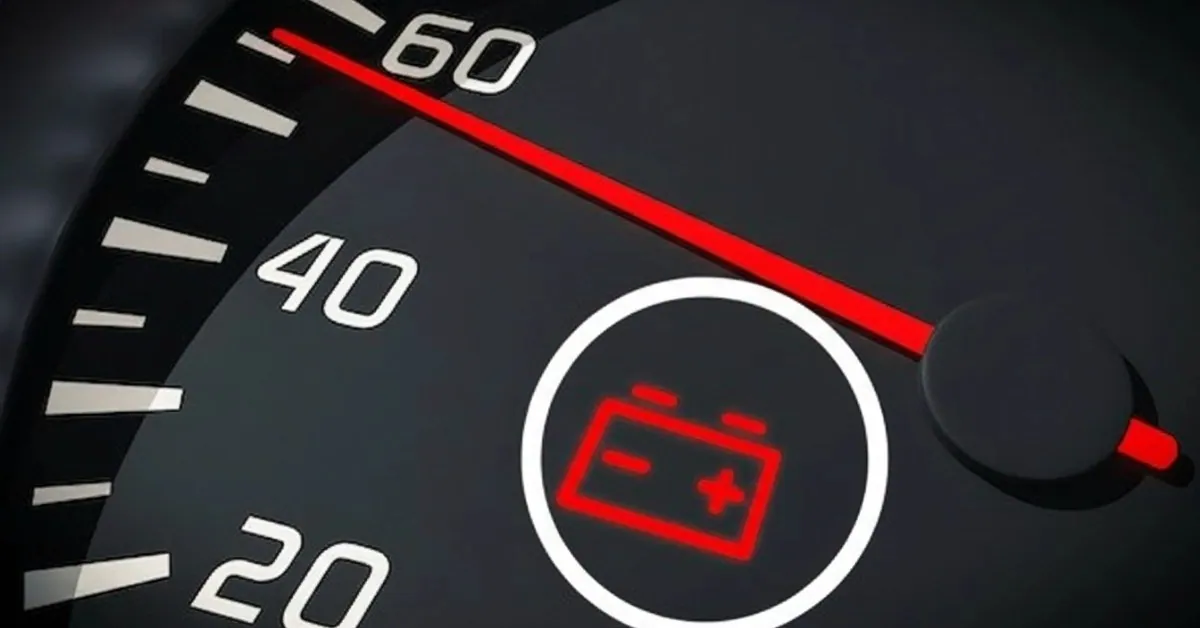
The Battery Lamp Comes On
This lamp lights when the charging system sees voltage straying outside its normal band.
- Typical reading while driving: between 13.7V and 14.7V
- What it is telling you: the alternator is not supplying enough to recharge the battery
- Frequent culprit: a voltage regulator inside the alternator damaged by heat
Do not drive on and hope. Once the lamp is on, expect the battery to run completely flat on the move before the journey is out.
A Bulging Case
A swollen casing comes from thermal runaway: heat drives gas pressure up inside faster than the vents can let it out.
- Usual trigger: prolonged exposure above 45°C
- What goes on inside: the electrolyte boils, giving off hydrogen and oxygen that push the case outwards
- How serious: a bulging battery can leak sulfuric acid over nearby parts, wiring looms and ECU brackets included
- What to do: replace it at once, and never try to charge or jump-start it
A Smell of Sulphur or Bad Eggs
That smell from under the bonnet means the battery is being overcharged or is damaged inside, and hydrogen sulphide is escaping from the electrolyte.
- Why: overcharging or an internal short is boiling the sulfuric acid electrolyte
- Hazard: the acid mist is corrosive, and the hydrogen given off with it is flammable
- Knock-on damage: leaking acid eats into the tray, the cables and nearby metalwork
Treat it as a genuine safety warning, and have a professional look at the battery inside 24 hours.
Jump Leads Needed Again and Again
A sound battery keeps its charge for days, even weeks, while the car is parked. A failing one cannot, because sulfation has shrunk the active surface of its plates.
- Sound battery: stays charged for 2 to 4 weeks against normal standby drain (10 to 50mA from sleeping electronics)
- Failing battery: goes flat overnight or inside 12 to 24 hours.
- Telling sign: more than 2 jump-starts within 30 days means a replacement is overdue
Why Batteries Fail Suddenly in the UAE
Five causes lie behind most sudden failures. All of them can be measured, and all tie back to heat, driving patterns and the car's electrical load.
Heat and the Climate
Heat does more damage than anything else. Heat speeds up corrosion of the positive grid in a lead-acid battery, building oxide layers that cut conductivity.
With summer days of 45°C to 50°C:
- Life falls 40% to 60% short of the rated figure.
- Water in the electrolyte evaporates 3 to 4 times as fast, leaving plates open to sulfation.
- Self-discharge rises, so the battery drains even while parked
So a 36-month battery, rated at 25°C, can be finished after only 12 to 15 months here.
Age and Ordinary Wear
Each cycle of charging and discharging costs some capacity. In hot conditions the decline sets in at 18 to 24 months, far sooner than most owners expect.
Once a battery is past 24 months, load-test it every 3 months so falling capacity shows up before it strands you.
Faults in the Charging System
On the move, the alternator keeps the battery topped up, and a healthy one puts 13.7V to 14.7V across the terminals. Drop under 13.5V and the battery never fully recharges, draining a little more each day.
Typical signs of a failing alternator:
- The battery lamp lights up 15 to 30 minutes into a drive.
- With the engine running, the battery still reads 12.4V or less.
- Headlamps fade when idling, then perk up with more revs.
Short Journeys and a Charge Never Finished
Starting draws heavy current over a few seconds and strips away the surface charge. Putting it all back needs a steady 15 to 20 minutes behind the wheel.
Stop-start city driving in Dubai rarely allows that, so the battery is chronically undercharged and never reaches a 100% state of charge. Across 3 to 6 months, 15% to 30% of its capacity disappears.
Corroded or Slack Connections
Corrosion on a terminal adds resistance to the circuit, and with a starter drawing hundreds of amps, even a few thousandths of an ohm can shave 0.5V to 1.0V off the voltage.
Along the coast, around Dubai Marina and Sharjah Al Khan, salty air makes terminals corrode 2 to 3 times as quickly as inland. A loose clamp arcs as well, scorching the metal and speeding oxidation.
Electrical Load From Accessories
Today's cars run a long list of electrical systems: the ECU, sensors, GPS, infotainment, phone chargers and dashcams. Add the steady pull of the AC compressor and total demand can hit 80A to 120A.
When alternator output at idle falls short, the battery is drawn on for the difference. Crawl along Al Khail Road or Sheikh Zayed Road at rush hour and all that idling gradually flattens it with no chance to recover.
Your Battery Just Died: What Next?
Get the Car Somewhere Safe
Pull onto the hard shoulder straight away. Traffic on main routes such as Al Khail Road (D68) and Sheikh Zayed Road (E11) travels at speeds of 80 to 120 km/h; a car with a dead battery sitting in a running lane is genuinely dangerous. Switch the hazard lights on and let the car's remaining momentum carry you clear.
See What Still Works
Before deciding the battery is completely dead, try the basics. If the headlamps, instrument panel and infotainment are all lifeless, it has probably fallen under 10.5V, the least that basic electronics need. A battery showing 12.4V to 12.6V that still will not start the car is usually weak rather than flat.
Jump-Start It the Safe Way
A jump-start is a dependable stopgap when the battery has slipped under cranking level but has no internal damage.
Connect the leads in this order:
- Red lead onto the positive terminal of the flat battery
- Other end of the red lead onto the positive terminal of the helper battery
- Black lead onto the negative terminal of the helper battery
- Other end of the black lead onto bare, unpainted metal on the stranded car, away from its battery terminal.
Once it starts, stay on the road for a solid 20 to 30 minutes or longer, giving the alternator a chance to put some charge back. Do not switch off before that time is up.
Keep the Engine Running
A freshly jump-started battery needs time to rebuild its surface charge. Killing the engine inside 5 minutes cuts off the alternator and leaves the battery as drained as before. Carry on driving and keep the AC, audio and lights to a minimum meanwhile.
Find Out Why It Happened
A flat battery is frequently the symptom of one of 4 deeper faults:
- A battery more than 24 months old
- An alternator putting out under 13.5V in normal driving
- Corroded or loose terminals adding resistance
- A drain from a faulty relay, a module or an accessory left switched on
A technician with a battery load tester and an alternator output meter can pinpoint the source within 15 minutes.
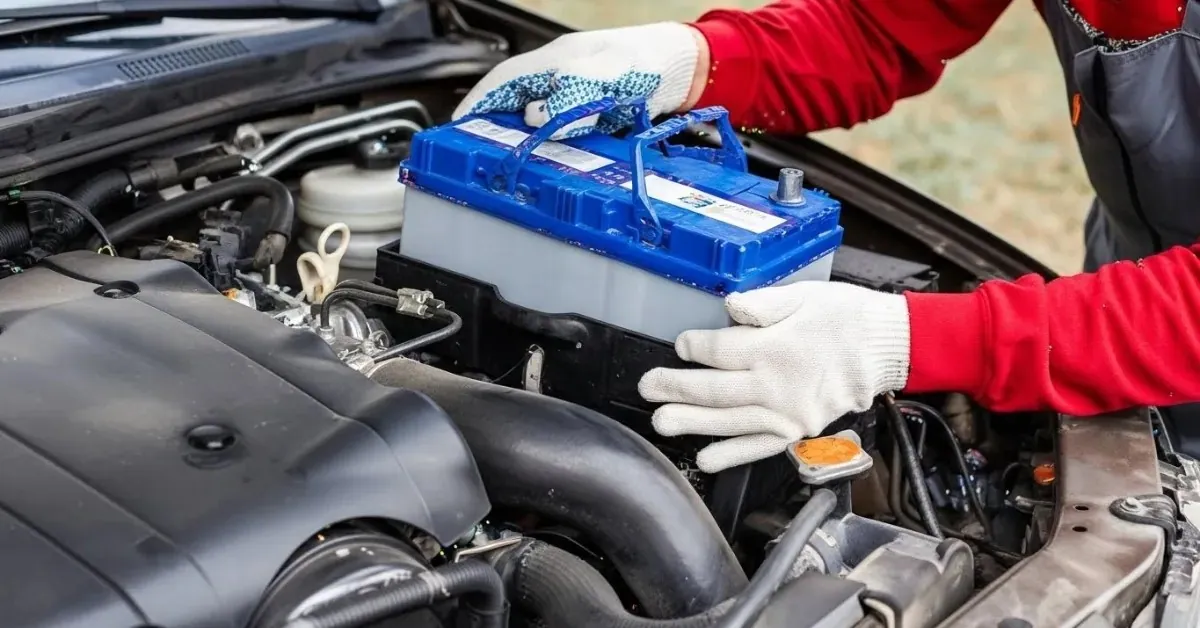
Replace It When the Time Comes
In a Dubai climate, a battery that has died twice inside 6 months cannot be saved, and a new one is the only dependable fix. Holding off only raises the chance of a breakdown, especially from June through September, when the thermometer passes 45°C most days.
Adding Months to Your Battery's Life
Six practical habits can stretch service life by 30% to 50%.
Choose covered or shaded parking: a roof or a basement keeps the battery 10°C to 20°C cooler than open sun, easing heat stress on the plates, which can mean roughly 4 to 8 extra months of life through a Dubai summer.
Take a longer run weekly: 30 minutes or more on a highway such as Al Ain Road (E22) or Sheikh Zayed Road (E11) gives the alternator time to recharge fully and undoes the chronic undercharging of short town trips.
Turn everything off with the engine: AC, radio, dashcam or a phone charger left running pulls straight from the battery. A 0.5A load such as a dashcam left on for 24 hours takes around 12Ah out of it.
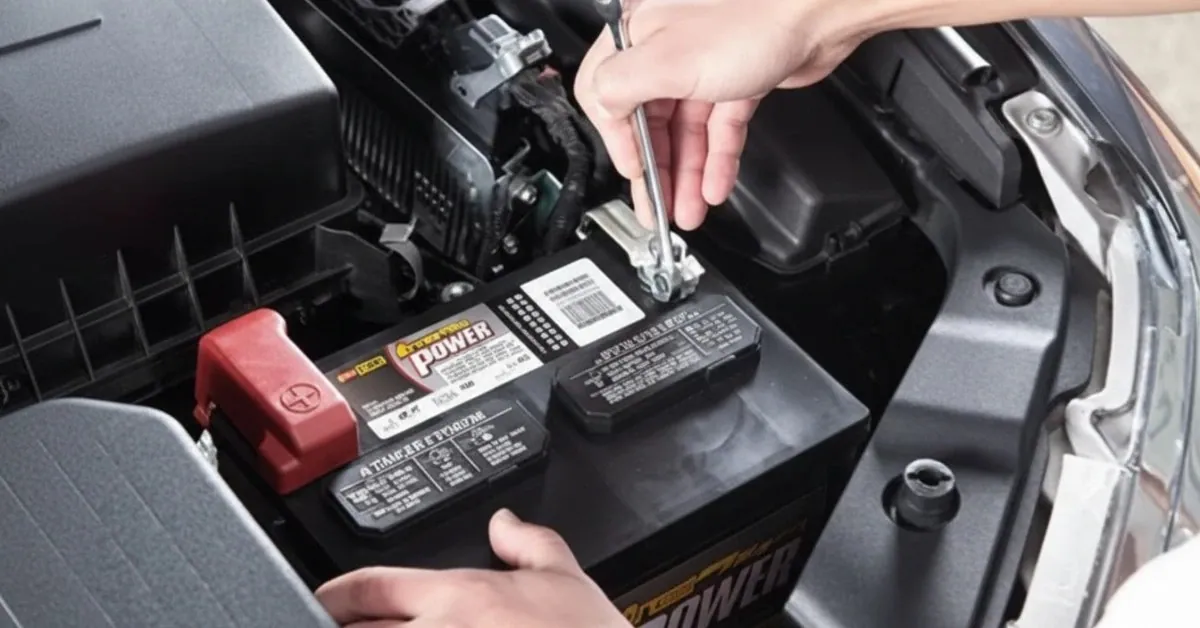
Every 3 months, deal with the terminals: scrub off corrosion with baking soda, water and a stiff brush, dry everything and finish with petroleum jelly or an anti-corrosion spray. That keeps terminal resistance low so current flows steadily.
Have a professional load test every 6 months: it compares actual CCA (Cold Cranking Amps) with the rating and exposes weak cells early. We throw in a free load test and alternator check, catching heat damage before your car battery gives out.
Plan for long lay-ups: if the car will stand for over 14 days, unclip the negative lead or fit a maintenance charger on 13.6V float. That prevents the sulfation that permanently robs a stored battery of capacity.
When a Battery Problem Needs a Professional
Call in a professional if you see any of 4 clear signs: more than one jump-start in 30 days, the battery lamp lighting during ordinary driving, visible corrosion or a swollen case, or a battery aged 24 months or more that has lived through extreme heat. Each shows the battery is no longer performing at a safe level.
A proper load test locates the real fault, telling you whether it sits in the battery, the alternator or the wiring. Our technicians use digital testers to read internal resistance, alternator output and CCA (Cold Cranking Amps), which gives a clear answer and avoids swapping a battery that did not need it.
A few easy habits help make sure there is always enough power to start the engine:
- Skip the radio while the engine is off, especially with a powerful sound system.
- Pull out chargers: some keep drawing a small trickle of standby power even with no phone attached.
- Keep the terminals clean: corrosion adds resistance, forcing the battery to strain to deliver its power.
- Go easy on short hops: replacing what starting used takes the alternator roughly 15-20 minutes on the road, so a string of 5-minute trips slowly runs the battery down.
Questions Drivers Ask Us
How many months will a battery survive in Dubai?
Here, an ordinary lead-acid unit gives 18 to 30 months. Choose AGM (Absorbent Glass Mat) and you can expect 3 to 4 years, since its sealed glass-mat build limits heat damage and electrolyte loss. The 4 to 5 years manufacturers quote come from testing at 25°C, not from a Gulf summer.
Why does the heat keep flattening my battery?
Heat does 3 main kinds of damage. Evaporating electrolyte weakens the acid, sulfation (PbSO₄ crystals) on the plates cuts how much energy they can store, and grid corrosion wears away the internal structure. Add short trips and constant AC that stop a full charge, and plenty of batteries are running undercharged within 12 months.
Should I worry about a swollen battery?
You should. Swelling means gas pressure has built up inside the case, usually from overcharging or intense heat, and the battery may leak acid or vent flammable gas. Do not charge it or jump-start it; get a professional to replace it.
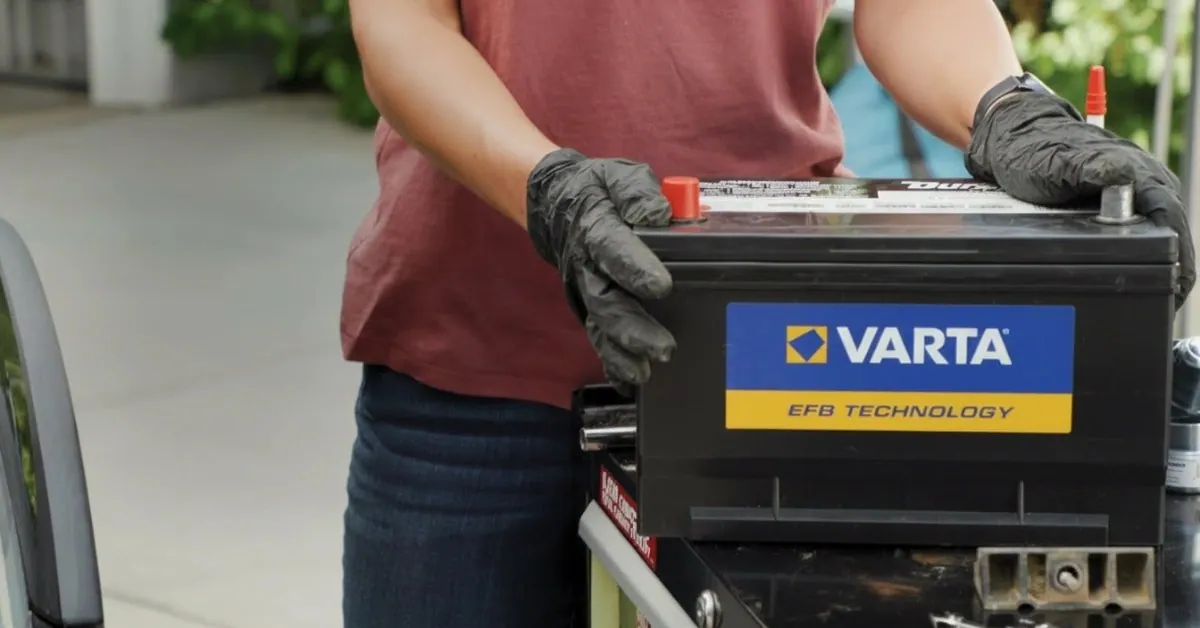
Start-stop cars are what Varta designs its AGM batteries around.
Bosch is another dependable name, with sizes to suit almost any class of car.
Which type of battery copes best with UAE conditions?
AGM handles extreme heat better than the rest. Being sealed, it does not lose electrolyte to evaporation, the glass mat curbs sulfation, and it recharges more quickly on short runs. AGM is widely recommended for consistently hot climates, and cars with start-stop or heavy electrical loads need one.
What will a replacement cost?
Expect AED 150 to 450 for a standard or maintenance-free battery, AED 350 to 550 for EFB and AED 500 to 900 for AGM, with premium AGM for luxury models from AED 800 to 1,500 or more. We quote clearly and fit the battery free of charge.
Does heat really make that much difference?
It does. Batteries are rated at 25°C, and each 8°C above that roughly halves the life of a sealed unit, so by about 45°C the loss is severe. Engine bays climb to 60°C to 70°C, which is why batteries age so much faster, particularly in summer.
Battery trouble in Dubai? We come to you.
On-site testing, replacement and roadside help, 24/7 across the city.