The short answer
Batteries always seem to pick the worst moment. The key turns and nothing at all happens: no whirr, no dashboard glow. Then you remember there is no set of leads in the boot.
It happens to plenty of people. Across the Emirates, heat, short hops and ageing batteries leave drivers in exactly this spot. Thankfully, there are a handful of safe things you can try.
Here we set out your options once the battery has given up and no leads are available, and explains when it is wiser to stop experimenting and call in a professional.
What Kills a Battery Without Warning?
Work out what flattened it and the next move becomes clearer.
The usual culprits:
- Headlamps or cabin lights left switched on
- Relentless local heat wearing the battery out
- An ageing, weakened battery
- Faulty wiring, or a tired alternator
- A string of short drives that never let it charge fully
A car battery that flattens repeatedly suggests something more is wrong than a simple lack of charge.
Start by Confirming It Really Is Flat
A weak battery and a completely dead one behave differently. Ask yourself:
- Do the dashboard lights glow, even dimly?
- Is there a click from the engine, but no start?
- Do the electric windows creep up and down?
No reaction whatsoever usually means the battery is completely drained.
Option 1: Bump Start (Manual Gearbox Only)
With a manual car, a push start is worth a try.
Doing a push start safely
- Switch the ignition to ON
- Hold the clutch pedal right down
- Select second gear
- Get one or two helpers to push
- When the car is rolling, let the clutch up gradually
- Ease onto the accelerator
Once it fires, keep the engine turning over for 20–30 minutes or longer.
Keep in mind:
- Automatics cannot be started this way
- Stay off busy roads and hills
- Give up at once if anything feels unsafe
Option 2: A Portable Jump Pack
Many motorists now carry a compact jump starter, which needs no second car.
If there is one in the car:
- Attach the clamps to the right posts
- Do what the maker's instructions say
- Crank the engine
- Unclip once it is running
Of the do-it-yourself routes, this is among the safest.
Option 3: Switch Everything Off and Try Once More
Occasionally there is just enough charge left to do it.
Before the next attempt:
- Switch the air conditioning off
- Switch the headlamps off
- Switch the screen and audio off
- Shut every door
Give it 2–3 minutes, then turn the key again. It only helps a weak battery; a fully dead one will not respond.
Things to Avoid With a Dead Battery
Steer clear of these:
- Never bridge the two terminals together
- Never improvise with whatever wire is lying around
- Never keep cranking over and over
- Never tip water or fizzy drinks over the terminals
Any of them can harm the vehicle or hurt you.
When Home Fixes Fall Short
If nothing above has worked, stop there.
Call a professional when:
- Nothing electrical responds at all
- The battery has passed 2–3 years in service
- The engine cuts out again soon after starting
- There is a burning smell
- Warning lamps will not go out
At that point, a car jump-start service is the quickest and safest answer. A trained technician boosts the car without putting its electronics at risk, and you get going sooner.
Is It the Battery or the Alternator?
The battery is not always the true cause.
Pointers to an alternator fault:
- A fresh charge disappears fast
- The battery symbol on the dash stays lit
- Headlamps fade as you drive
- An odd whining sound from the engine bay
Here you need car alternator & dynamo repair; a new battery on its own will not cure it.
Stuck in Traffic or Far From Help?
When the car dies somewhere unsafe, do not gamble on pushing it or trying things out.
A roadside assistance crew brings:
- Protection for you and other road users
- A proper test of the battery
- A fix on the spot where one is possible
Where the engine cannot be started, car towing or car recovery Dubai services can take the vehicle to a workshop safely.
Worst Case: A Battery With Nothing Left
When the battery is totally flat or physically damaged:
- A jump may fail
- It may have to be replaced
- The car is not safe to drive
Towing is then the sensible choice, as it stops any more harm to the electrics.
Keeping It From Happening Again
A few easy routines will keep you from being stranded next time.
Try these:
- Change the battery every 2–3 years, given the local climate
- Cut down on short daily trips
- Switch off every electrical item before you park
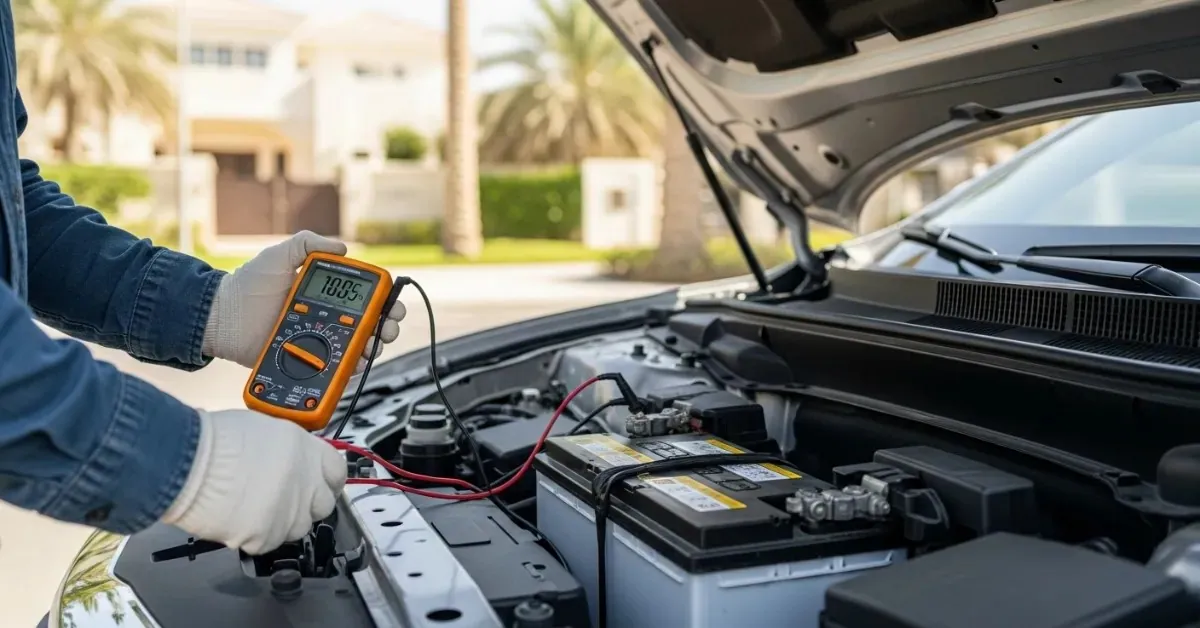
- Have the battery's condition tested regularly
- Deal with alternator faults as soon as they appear
Routine care is kinder to your wallet than a breakdown callout.
Why a Professional Is Usually the Better Bet
Today's cars carry delicate electronics. A badly done jump or push start can lead to:
- A damaged ECU
- Failed sensors
- Electrical faults
- Expensive repair bills
Technicians bring the correct equipment and method, which lowers the risk and saves you money over time.
In Summary
You can sometimes get a car going on a flat battery without jumper cables, but it is not always safe and it does not always work. Push starts and jump packs have their uses, and their limits.
If the engine stays silent or the battery keeps dying, lean on experienced roadside technicians. Our battery replacement service in Dubai gets drivers moving again safely, without needless damage or waiting.
What matters most is knowing when to have a go and when to leave it.
Battery trouble in Dubai? We come to you.
On-site testing, replacement and roadside help, 24/7 across the city.