The short answer
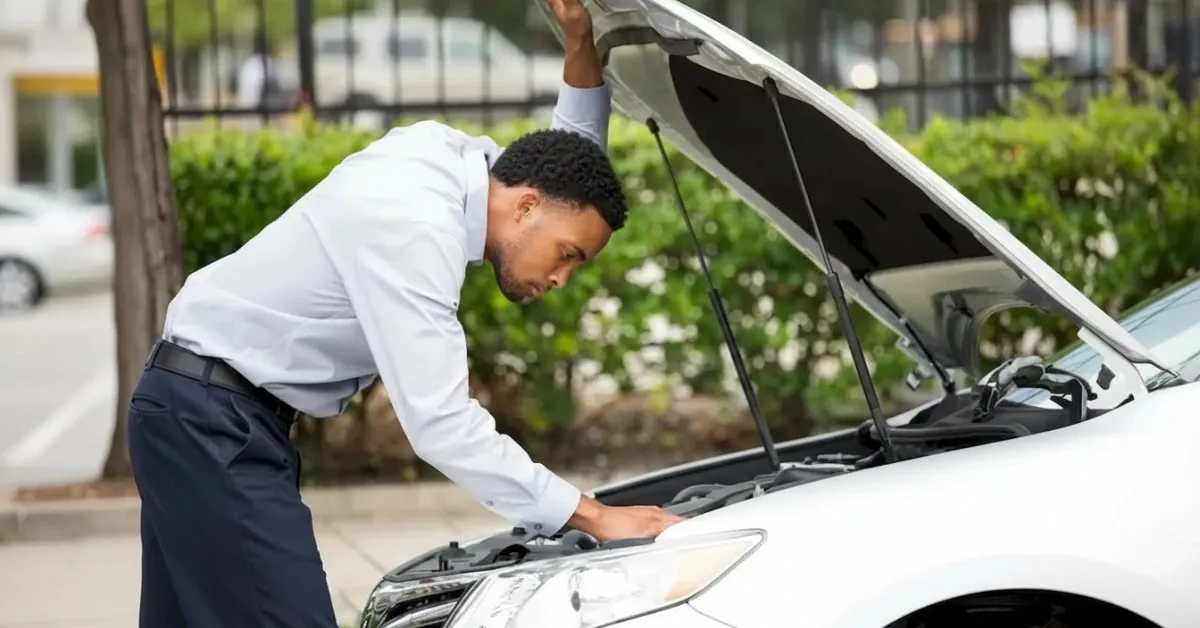
When an automatic refuses to crank, a flat battery is the usual suspect. A manual can be rolled into life, but an automatic cannot, because its gearbox needs electrical power before it will engage. Your quickest way out is a set of jump leads and a second car to lend some charge.
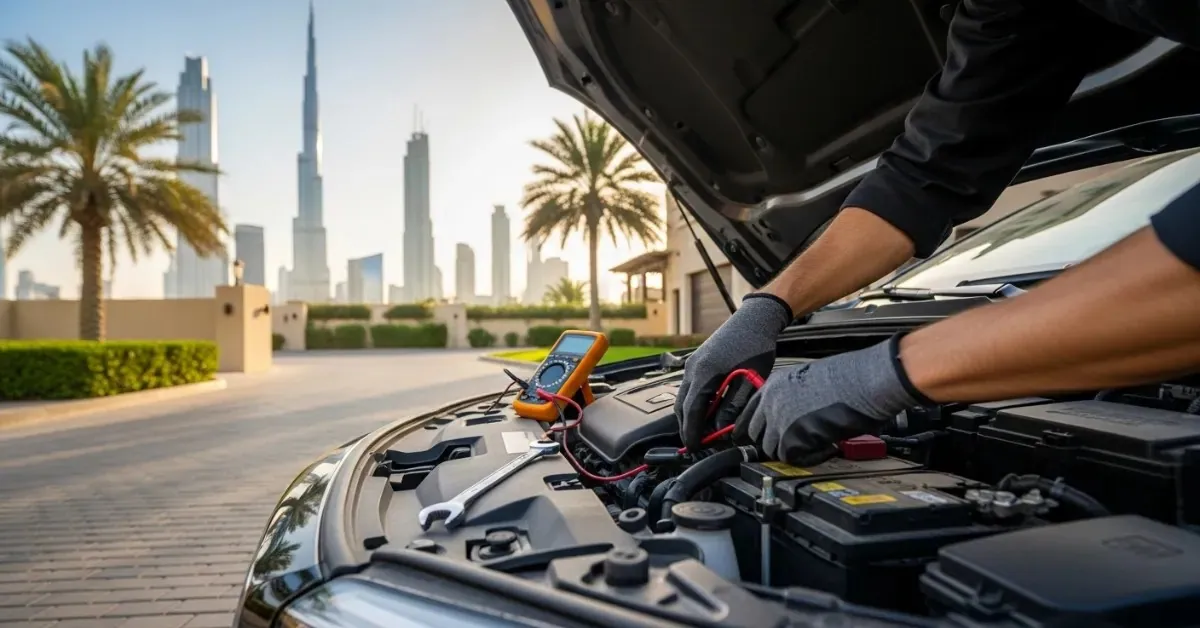
What follows is the safe method for jump-starting an automatic on UAE roads. Keeping to the correct sequence brings the power back without frying the car's delicate electronics. If the battery is too worn to hold charge any more, we can fit a replacement in Dubai so the car stays dependable through the heat.
What Makes an Automatic Different?
You have probably seen a film where someone rolls a car downhill to get it going. That trick, known as bump starting, relies on a manual gearbox: let the clutch out while the wheels are turning and the engine is forced to spin.
An automatic simply will not do that. With no power, its transmission does not link the engine to the wheels in the same way, and pushing one in the hope of starting it can harm a very costly gearbox. What it needs is power from outside.
That is exactly what a jump provides. If handling leads is not something you are comfortable with, a professional car jumpstart crew can come out and do it for you.
Kit to Have Ready
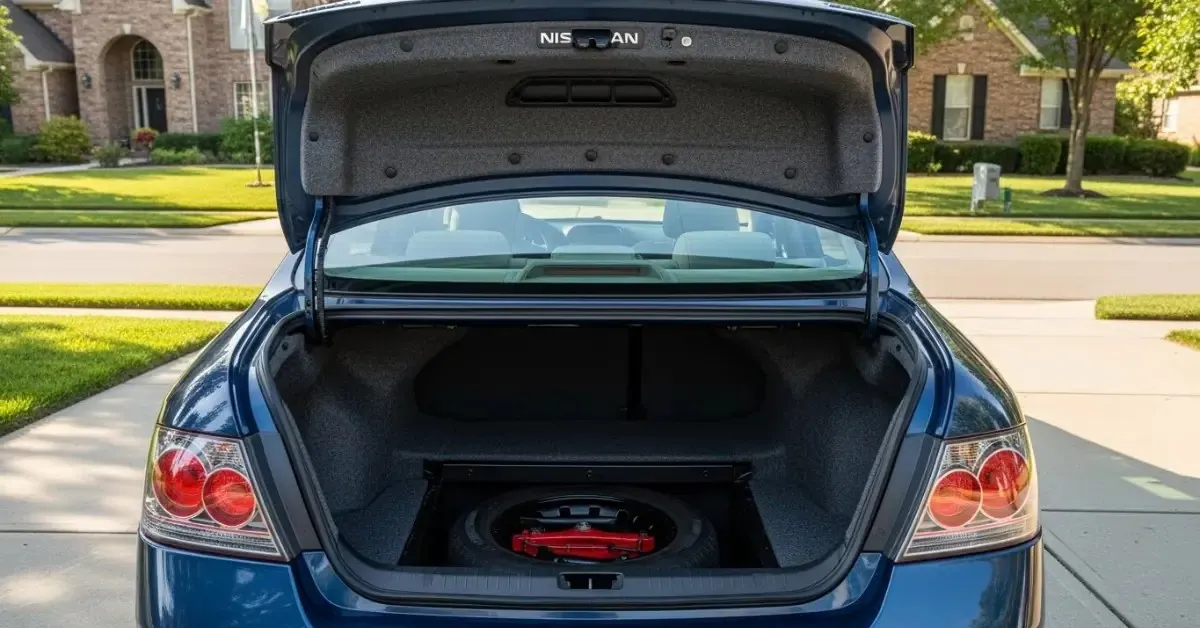
Only a few items are needed, and it pays to leave them in the boot permanently, above all through the summer here.
- Jump leads: Choose a heavy-duty set, which copes better with both the heat and the current.
- A donor car: Any second vehicle whose battery is healthy and working.
- Protection: Rubber gloves and safety glasses keep sparks and acid away from your hands and eyes.
- A clean rag: For wiping sand and dust off the battery posts.
Three Rules Before You Begin
Keep these in mind before a single clamp goes on, for your sake and the car's:
- Inspect the battery first: A flat battery that is leaking, swollen or cracked must not be jumped, as that is genuinely dangerous. Call a professional or roadside assistance straight away instead.
- Keep the jaws apart: Once the leads are attached to a battery, the red and black clamps must never meet, or they will throw large sparks.
- Switch both cars off: Ignition, headlights and air conditioning should all be off in each vehicle before you start.
Jump-Starting an Automatic, Step by Step
Do these in exactly this sequence. Think of it as a recipe where changing the order makes it unsafe.
Step 1: Line Up the Two Cars
Bring the donor car in so the two front ends face each other. The gap should be small enough for the leads to span, yet the bodywork must not touch. Select Park (P) in both and put the handbrakes on.
Step 2: Find the Positive and Negative Posts
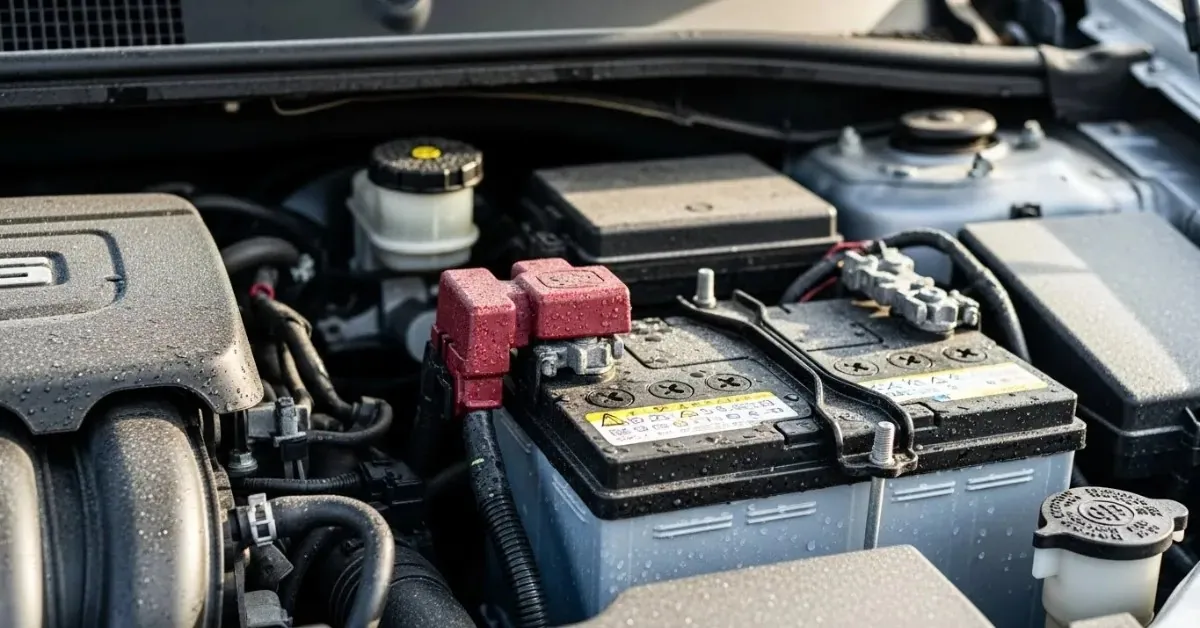
Lift both bonnets and locate the batteries. Each one has a pair of metal posts:
- Positive (+): Normally a red cover or a plus symbol.
- Negative (-): Normally a black cover or a minus symbol.
Handy hint: white crust on the posts is corrosion. Scrub it off with a rag or wire brush so the clamps bite onto clean metal.
Step 3: Fit the Red Lead (Positive)
- Clip one red clamp onto the + post of the dead battery.
- Clip the red clamp at the opposite end onto the donor battery's positive (+) post.
Step 4: Fit the Black Lead (Negative)
- Clip one black clamp onto the donor battery's negative (-) post.
- Hold on! The last black clamp stays off the dead battery's - post. Fix it to solid, bare metal on the engine block of the car that will not start. That gives a safe earth and keeps any spark away from the gas a battery gives off.
Step 5: Run the Engines
- Fire up the donor car and leave it running for roughly 3 to 5 minutes, which passes a gentle trickle of charge into the flat battery.
- Then try your own car. If it starts, well done. If not, give it a further 5 minutes and try again.
Step 6: Take the Leads Off Backwards
Leave your engine running once it has started, and remove the leads in precisely the opposite order to how they went on:
- Black clamp off the bare metal earth point.
- Black clamp off the donor battery.
- Red clamp off the donor battery.
- Red clamp off your own battery, which is now running.
The Jump Did Not Work. Now What?
Some batteries are just too old or too far gone to take a charge. If two attempts at jumping have not got the engine to turn, the fault may lie elsewhere, for instance a failing starter motor or a problem with the alternator.
Stranded beside a busy road, or down in a basement car park where leads cannot reach another car? Stay calm and phone for help; a technician can be sent to wherever you are.
Looking After the Battery Once You Are Going
Resist switching off straight away. The alternator needs a while to put charge back in.
- Stay on the road: Keep going for a minimum of 20 to 30 minutes; that way the charging system can restore what the jump borrowed.
- Skip quick hops: Switch off after only 2 minutes and there will not be enough charge for the next start, leaving you exactly where you began.
- Book a test: A car battery that has gone flat is frequently nearing retirement. Ask a technician to measure its Cold Cranking Amps (CCA) so you know whether to replace it before the next heatwave arrives.
Quick Reference: Which Clamp Goes Where
| Lead Colour | Connection Point 1 (Order) | Connection Point 2 (Order) |
|---|---|---|
| RED (+) | Dead Battery Positive (1st) | Good Battery Positive (2nd) |
| BLACK (-) | Good Battery Negative (3rd) | Dead Car Metal Surface (4th) |
Why Does Battery Condition Matter So Much Here?
Vehicles in the Emirates are pushed far harder than in most countries. With summer days of 40°C+ and the air conditioning running almost nonstop, the chemistry inside the battery works at a much faster pace, and the battery loses fluid as a result.
A successful jump today does not mean the car battery is healthy again: one that has been drained completely even once is frequently left weaker for good. Acting early beats being stranded later.
Closing Advice
There is nothing mysterious about getting an automatic going on a flat battery; it is basic science. Keep a set of leads in the car, remember red to red and black to bare metal, and most battery emergencies are within your own reach.
Your own safety still comes first. If it is dark, if the road is dangerous, or if the battery is smoking or leaking, leave it to the professionals. A quick boost or a complete replacement in Dubai is only a phone call away. Stay safe, keep cool, and keep those leads in the boot.
Battery trouble in Dubai? We come to you.
On-site testing, replacement and roadside help, 24/7 across the city.