The short answer
Open the bonnet and the battery looks like nothing more than a weighty plastic case with two metal posts. Inside, though, a busy chemical process is what keeps the car going. If you have ever asked yourself how much energy that case really stores, the answer is measured in watts.
Knowing what your battery holds is useful for everyday driving, not just for engineers. It tells you how long the headlights can stay on, or whether a laptop charger is a safe idea on a long run through the desert. Below, the sums are broken into easy steps so the car's energy stops being a mystery.
Volts, Amps and Watts in Plain Terms
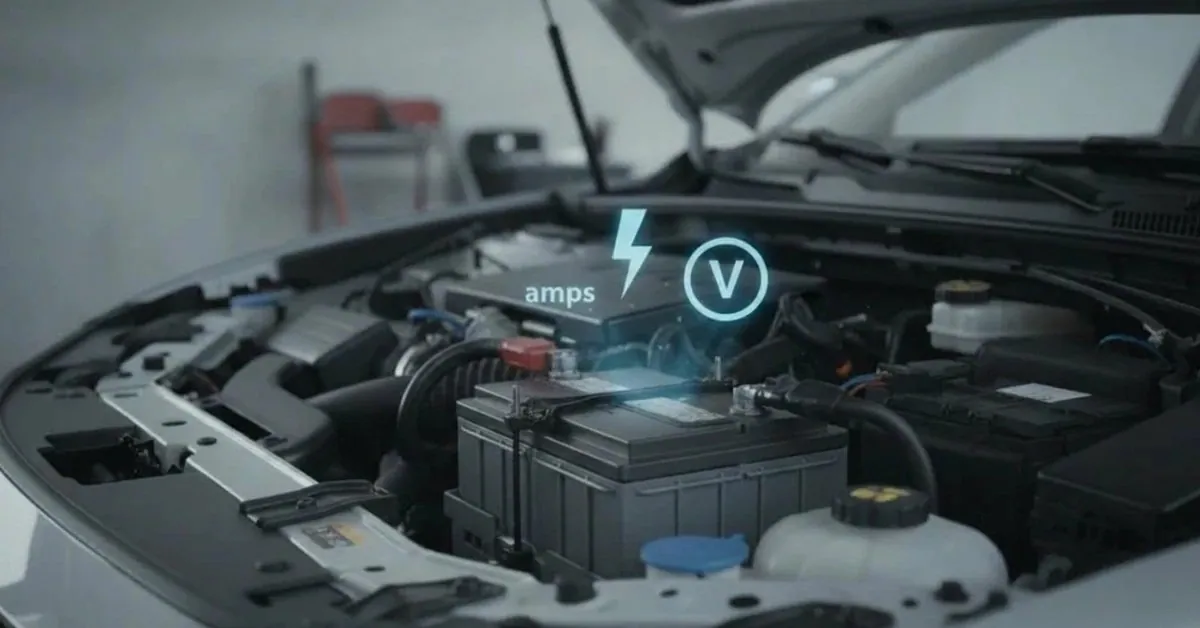
Three units decide how much energy the battery holds. It helps to picture electricity as water running along a hose:
- Volts: the pressure driving the water along the hose. Almost every car runs on a 12-volt system.
- Amps: how much water is moving along the hose.
- Watts: the overall power you get from that flow and pressure together.
The sum itself is easy:
watts = volts × amps
Putting the Numbers to Work
Batteries are usually labelled in amp-hours (Ah), and a common size is 60 Ah. Multiply the voltage by that figure and you get the stored energy in watt-hours (Wh):
12V × 60Ah = 720 Wh
So an ordinary battery stores roughly 720 watt-hours. Put simply, that is enough to run a 720-watt appliance for an hour, or a 1-watt one for 720 hours.
Why Capacity Counts for UAE Drivers
Cars here work hard. With summer temperatures regularly beyond 40°C+, batteries spend long stretches in punishing heat. Warmth speeds up the chemistry inside, which can give a small lift in output at first, but it also wears the battery out far faster.
Let the capacity fall too far and there are not enough watts left to crank the engine. That is when you end up stuck and calling for a car jumpstart. Thinking in watts makes the point clear: the battery is a fuel tank for electricity with a fixed size, and once it runs dry the car goes nowhere.
Cranking Power Against Running Power
Getting an engine started takes a very different amount of power from keeping the car's systems going afterwards.
1. Starting the Engine
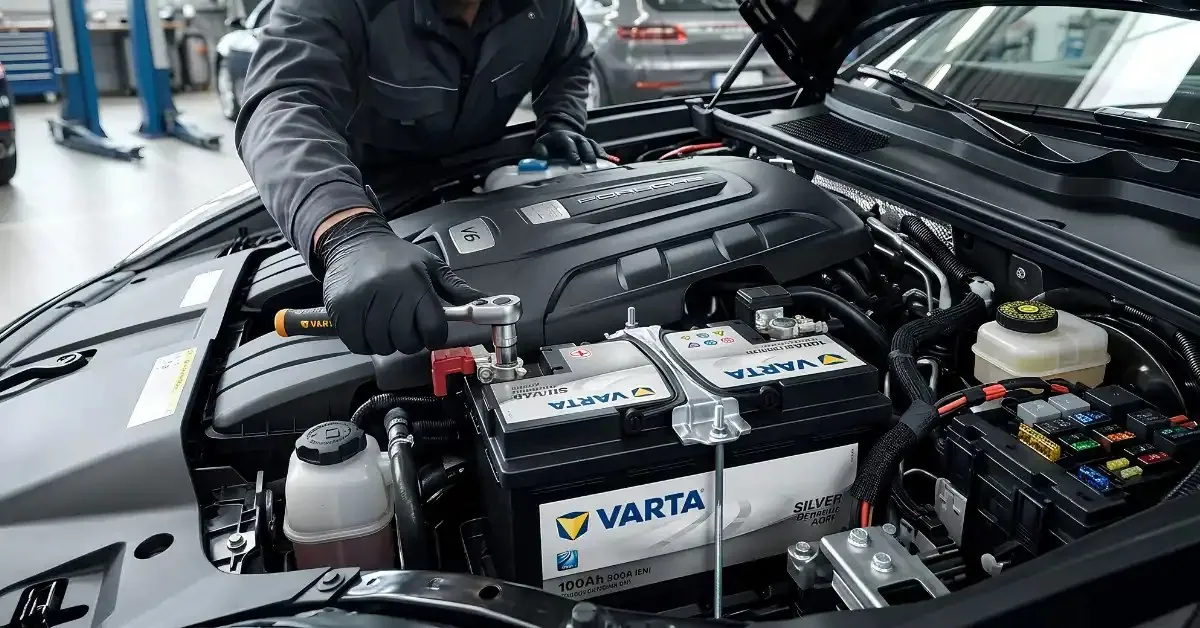
The starter demands a huge, brief surge, rated as Cold Cranking Amps (CCA). A typical V6 may call for between 400 and 600 amps over a few seconds. Run that through the formula (12V × 500A) and it comes to 6,000 watts, just to get the engine turning!
2. Keeping Things Running
With the engine going, the alternator takes over the heavy work from the battery. If the alternator fails, though, the battery must carry the whole load alone, and how long it can manage is its Reserve Capacity. When the alternator is not charging properly, have it checked so the battery is not quietly emptied as you drive.
How Long Will the Charge Keep Things Going?
Parked up waiting for a friend to arrive, or out camping for the night, you may be drawing on the battery with the engine off. Rough power figures for everyday items:
- Headlamps: about 100 watts
- The stereo: somewhere around 20 – 50 watts
- Cabin lamps: roughly 10 – 20 watts
- A phone on charge: close to 10 watts
- A dash cam: near 5 watts
Working It Out
Take a 720-watt-hour battery with 100-watt headlights left burning. How long before it is flat?
7.2 hours = 720 Wh ÷ 100 W
In practice you should never run a battery right down. Once it falls below 50% charge it may struggle to turn the engine over, so the real figure is nearer 3 to 4 hours of headlights before you are stuck.
What Raises or Lowers the Stored Energy
Two 12-volt batteries can still differ a lot. A handful of factors decide how much energy yours can store:
1. Physical Size (Group Size)
Bigger generally means more capacity. The battery in a 4×4 SUV stores far more watt-hours than the small one in a compact runabout.
2. How Old It Is
With age, the lead plates inside wear down. The label may still read 60 Ah while the battery can really manage only 30 Ah. Once a battery is past three years old and no longer holds its charge, a car battery replacement is usually the way to avoid being caught out.
3. Heat
As noted above, high temperatures do the most damage. Warmth quickens the chemistry, yet it also dries out the electrolyte over time, and a battery short of fluid cannot store its full rated energy.
Energy Use and Modern Comforts
Many cars on UAE roads are computers on wheels, with ventilated seats, big touchscreens, navigation and a host of safety sensors. Every one of those draws power.
Add extras such as a 1,000-watt amplifier driving a premium audio set-up, and the standard battery and alternator may struggle to cope.
The result can be headlights that fade or the charge warning symbol lighting up. Before fitting any power-hungry upgrade, make sure the battery has the spare capacity for it.
Habits That Save Energy
Keep enough charge in reserve for starting by sticking to a few simple rules:
- Skip the stereo with the engine off: all the more so with a powerful sound system.
- Pull out chargers: some still draw a trickle of standby power with no phone attached.
- Keep the posts clean: corrosion adds resistance, so the battery has to work harder to deliver its power.
- Avoid very short journeys: it takes the alternator about 15-20 minutes of steady motoring to put back what each start used. Repeated 5-minute trips gradually run the battery down.
The Bottom Line
Most batteries store from 600 up to 1200 watt-hours, according to their size and condition. That may sound plenty, but because starting the engine takes such a heavy surge, you need to be careful how much you use with the engine switched off.
Understanding exactly what your battery can and cannot do is the surest way to avoid being stranded in a car park. A slow crank or electronics behaving oddly both suggest the tank is getting low. Regular testing, and a replacement when the time comes, keeps the car charged and ready to go.
Battery trouble in Dubai? We come to you.
On-site testing, replacement and roadside help, 24/7 across the city.